
Of the total area that is used by humans (Agriculture, Urban and Built-up Land),
- urban and built-up land is 1m km²,
- agriculture is 48m km²,
so agriculture is 48 of 49 millions km² used, that’s 98%. The remaining 2% are all streets and housing and other infrastructure together.
I really hate the political meme of “they’re taking away our meat!” It’s been drummed up pre-emptively, before these sorts of illustrations can possibly take hold.
I saw this great documentary about a US Deep South native, a fried chicken lover, a CEO as white and conservative as you can get on a mission to develop the best plant-based chicken on Earth. This nut has frycooks in kitchens constantly testing it. And his pitch is awesome: it already tastes better, and if he could scale up, it’s cheaper, too. But anticompetitiveness in the global livestock industry, and PR smear campaigns, are apparently near insurmountable obstacles.
…I hate all that.
Truth doesn’t matter. Neither does practicality. It’s like we’re living in a cyberpunk novel already.
14% barren land seems low to me.
essentially all deserts
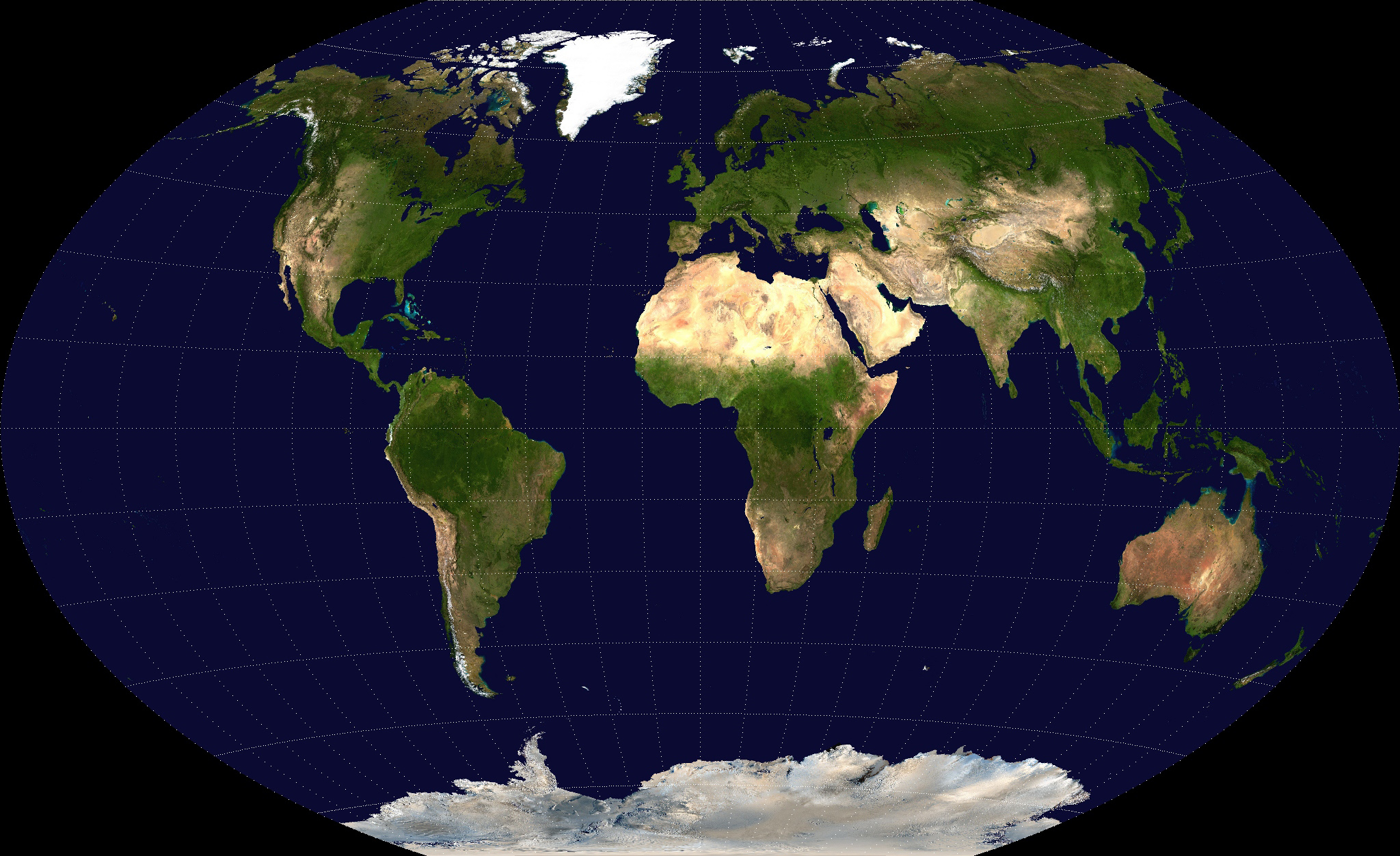
basically all areas that are bright yellow on this map :)
High elevation land in the Himalayas and South America is unusable. Also land in the arctic zone in Europe and North America.
Deserts are not actually barren.
That’s what I mean. 14% seems low just from eyeballing it. I guess if people live there, no matter how few, it gets counted as ‘habitable’. It always blows my mind when you zoom in on some of the most inhospitable places on Earth, you’ll still see little pockets of humanity eking out an existence there.
I guess if people live there, no matter how few, it gets counted as ‘habitable’.
My guess is
- barren land = little water. there’s probably a maximum amount of precipitation it must have a year.
- glaciers = no energy. there’s probably an upper limit on average yearly temperature or sth
- habitable land = has both water and sunlight (literally anything plants need to thrive)
This does not even seem close to the truth. Just a gut feeling though, not proof of anything.
It does seem to be missing mining/quary land, logging operations, oil fields, non-urban infrastructure (like highways), and parkland that kinda straddles human and wild land.
Not sure any of those other than the parks would add up to over 1%, though.
Around where I am, I could believe it, though. Outside of the cities, there’s many areas where you just see farm fields split up by roads and power lines from horizon to horizon.
Most unsustainable “logging land” is basically turned into grazing land. Brazil and the cut rainforests are a great example. But logging can be quite sustainable too: with some caveats, that can basically count as forest.
Oil fields are tiny, and share lands with other projects. See: west Texas, with cattle and windmills on the same land as the wells.
Parkland is often more “wild” than actual wild. Especially nature reserves.
IDK about highway statistics, but they really don’t take up a lot of physical land. Though their effect of dividing wilds is certainly understated in the graph.
IDK about mining either, but also it doesn’t seem like this would take up a ton of land. It’s really concentrated by necessity, and the worst environmental effects are usually related to pollutants or other knock-on effects.
The one fishy thing to me is grazing land. In places like Africa, there are lots of tribes and other low tech herders, and if you walk around, it really feels like their unfenced areas straddle the line between wilds and grazing lands. It’s nothing like (say) west Texas with vast fields of clearly dedicated grazing land.
People will say this is vegan propaganda
this is vegan propaganda
people, come on man
Considering there is missing data, it is.
What fucking data do you think exists that changes this message. Seriously, even if it is off by a ridiculous factor, it still doesn’t change anything. You’re looking for any excuse.
Well, there could be way more sheep and goats than we think there is (since they include textiles in the livestock category).
If some of the land used for pastures and for growing animal feed were used to grow food directly for humans, and the rest were rewilded, human land use would be massively lower.
Ban animal farming. It’s as vile as genocide and quite similar to it, and it wastes lots of our resources and damages the environment.
Thanks for coming to my TED talk
Land use would be lower if we reduced livestock, but likely not massively. Lots of grazing land isn’t suitable for farming, letting it go wild would also require a massive effort to reintroduce natural grazing animals, which would likely need active management. There’s also the fact most of our crops would need to change to optimize for human consumption, and humans aren’t as efficient at consuming those calories as livestock. Even after transitioning crops there’s going to be a significant amount that isn’t processable by humans that would sustain some amount of livestock.
Lots of grazing land isn’t suitable for farming,
Yeah no. Meat animals can only be raised on land which can grow crops.
The grazing land in Africa and the middle east is principally used for textiles like wool and cashmere.
Land use would be lower if we reduced livestock, but likely not massively. Lots of grazing land isn’t suitable for farming, letting it go wild would also require a massive effort to reintroduce natural grazing animals, which would likely need active management.
16% of the current farmland gives us around 75% of our diets. That means we only need around 21% for a 100% plant based diet. This also means we can free up 75% of animal land. I sure we can easily find that 5% in that whole 80%, don’t you think?
There’s also the fact most of our crops would need to change to optimize for human consumption, and humans aren’t as efficient at consuming those calories as livestock.
This is incorrect.
There’s a few diseases and allergies though where this becomes a thing. But even in such cases meat can be avoided.
Even after transitioning crops there’s going to be a significant amount that isn’t processable by humans that would sustain some amount of livestock.
This could be an argument if it was forced overnight but that would never happen. Transitioning towards a plant based society is not something that can happen overnight and will definitely take time. Phasing it out happens naturally.
💚
Thanks for ignoring all the nuances of marginal land management, tell me more about how you have no experience in the sector? Jesus people from the states think they know fucking everything
I am not from the US
No no, you tell us more. Go ahead. We’d love to be enlightened.
German here, please go ahead and explain how animal farming isn’t the worst shit.
It can make use of marginal land, otherwise unusable for producing food, to produce food. Yknow, the stuff we eat? To stay alive? I personally think the worst shit is cage farming, which is what I’m guessing comes to mind for you?
Why are lakes, rivers, and coastal water bodies under habitable land?
Because they are habitable? You can build on them, or use boats and such to live on them.
But if we count boats, then a large part of the oceans should count as habitable as well.
Maybe whoever made this didn’t consider them as land?
Edit: Although they only specify “Oceans” for the area of water, which excludes the mentioned other bodies of water. Idk…
Just a reminder that the peaty lands or vast tundras that are only suitable for grazing sheep and goats, or horses are likely also included into these statistics.
You can see this very clearly flying almost anywhere. It’s most obvious in places like the Midwest US, but even between cities in more densely populated regions, there’s so much farmland. Islands of concrete in oceans of ordered crop fields.
This chart also shows how terribly inefficient animal farming is.
Most pasture land isn’t suitable as farmland - there’s examples of overlap of course, but you really can’t draw that conclusion from the chart, it leaves out far too much information.
It’s not only pastures. Growing animal feed is vastly less efficient than growing food for humans directly. We could stop farming animals, use some of that land for growing human food, rewild the excess, and rewild the pastures.
Okay, but can we stop using suitable farmland to grow corn cattle feed?
The US could feed its own population multiple times over if we used something like 30% of our current agricultural farmland subject to growing animal feed instead for growing things like corn, soybean, and wheat, as well as vegetables and fruit.
We’d still need to import some stuff, but we could cover the vast majority of Americans’ nutrition doing this WHILE at the same time re-wilding the country and helping restore biodiversity.
Hope to see this shift in my lifetime
I’m wholly in support of this plan.
Yep for sure. The food grown to feed livestock (6M2 km) seems like it’s just feeding humans with extra steps. If you cut that out and feed humans directly. You’d still have livestock on grazing pad (32M2 km), just not the whole feedlot situation.
Or go a step further and stop doing animal farming.
At that point we don’t need to farm animals.
Best thing to do at that point would be to outlaw breeding of new farm animals, send the remaining ones to sanctuaries, and let them live the rest of their lives out on their own terms. Might need to sterilize as well.
All of this would aim to restore natural populations of cows, pigs, chickens, goats, sheep, etc. in the world to native levels. And if those animals aren’t native, then imo there is no reason to help sustain them. Release to the wild at some point and let nature take it’s course. Of course, this also means restoring natural predators to ecosystems like wolves, which would help keep populations in check.
Those species that are native, however, but are declining and on the brink of extinction: those we should focus on for conservation and regeneration.
It’s a tough balance, but it can be done ethically
Yeah, and those extra steps require more land and more water and more transportation and more harvesting and more processing etc etc. Every extra step makes the whole system less efficient. We’re essentially sacrificing farmland.
We’re not sacrificing it, exactly the opposite; without the demand for plant products generated by animal ag, we wouldn’t be able to exploit all that farmland. You know, for money.
During peacetime, all the corn fields kept operational with subsidy that just create corn which is fed to livestock seem like a waste.
But if China (or anybody else) pulls a fucky-wucky and makes it difficult to get food imported from outside the US, we slaughter the livestock and then have enough corn to feed the whole nation (and a lot of our allies). Without missing a beat.
You really still see yourself as belonging to the nation that protects the world, don’t you? Despite everything.
Yeah. Trump told you not to rely on Russian gas and did you listen? No, you didnt and now you buy Russian gas (through India), thus funding Russia, while telling us to shoulder the majority of the burden of funding Ukraine. Just for one example.
Y’all are threatening to kill your “allies” while trying to overthrow their democracies. You have no allies, and you sure as shit wouldn’t try to help them in a food shortage.
Allies? Lol.
Most of the corn cattle are eating is the stalk and husks. The stuff we’re going to grow regardless and would otherwise throw away.
Near slaughter when they get fattened up on feed lots (called finishing) it’s mostly cracked corn grain, it’s more towards the beggining of life that they’re fed roughage with only a small amount of supporting grain.
This is true. But at the same time, the tradeoff I think more about isn’t pasture versus crop land, but pasture and crop land versus wild land. Personally, I really enjoy eating meat, and have no problem with its production in general. But I also think that we should reserve far more land for nature.
Imo, a good way to strike the balance is via pigouvian taxes. First, of course, a carbon tax. Animal agriculture creates a lot of carbon, so higher prices would drive consumers to lower-carbon alternatives. Then a land value tax - the trick would be deciding how much the intrinsic beauty of nature and access to it by the public is worth - but once we figure out a decent number, the scheme should work quite well. If you want to farm/ranch, you aren’t allowed to use up everyone else’s nature for free. Either generate enough money to pay the public back for using their nature, or bounce. And of course, better rules and oversight for animal welfare - I wanna eat meat, not meat produced with unnecessary suffering.
This combination of approaches would reduce meat consumption and land use in a fair and ethical way, while still not being overbearing or playing favorites by doing things like banning x or y. Unfortunately, this is very much a pipe dream - at least in the US right now, as we have, umm… more pressing issues.
Eating animals causes unnecessary suffering though.
It’s unnecessary because you can get all of your nutrition through plant-based sources. And if that’s not enough, there are plant-based meat alternatives as well as lab grown meat on the horizon.
You don’t have a need to eat meat because you have options to eat other things that cause less to no suffering.
If we stopped hurting animals we could rewild a lot more land. All that pasture, boom, back to the wild. Then, all the farmland used to grow feed for animals, split it up into what is necessary for human flourishing and then the rest can also go back to the wild.
That’s the efficient use of land to feed the maximum number of people while maintaining the maximum wild acreage.
If we stopped hurting animals
So you’re saying “if everyone went vegan/vegetarian…” And I have a lot of doubt about the practical viability of this plan. People have been eating animals longer than we’ve had money or governments… or fire. So I’m betting it would be a bit of a tough habit to break. Development of affordable lab-grown meat could go a long way - but my bet is that there will be subtle (or not so subtle) differences between lab grown and real meat for quite a while, and there would be an indefinite market (maybe luxury, maybe just middle class) for real meat for the forseeable future.
Hence, rather than relying on people to voluntarily reduce meat consumption (they won’t) or applying heavy-handed and clumsy tactics (banning meat, deciding who or what is worthy of meat and when), we simply apply a price signal and reasonable regulations. The animals live relatively happy lives in reasonable and sanitary conditions. Then one day they wander down a hallway and are popped in the forehead with a bolt, and that’s it. Then the levers of prices can be pulled to gradually push peoples choices in long-term pro-social directions - gradually reducing meat consumption over time in whatever way makes sense to them, while wild land increases and carbon emissions decrease.
It’s interesting that you think prices are voluntary.
If meat is too expensive for poor people to eat, then it’s the same as banning poor people from eating meat.
I don’t think I said that? But using price incentives allows people to make the choice between spending their money on the same amount of a now more expensive good, or to change their behavior somehow. Hence, a poor person who previously ate beef every day has a number of options such as eating beef only on certain days of the week, eating a smaller portion of beef each day, or eating a less expensive kind of meat.
If we recognize that meat production has negative externalities, then to reduce these externalities we need to reduce meat production, which will necessarily reduce meat consumption. Above you seemed to be implying that the ideal solution would be cessation of meat production entirely - which I have to point out, would also result in poor people being unable to eat meat. So, are you defending the right of the poor to eat meat, or do you want to take the meat off their plates?
Really I assume that what you are getting at is economic fairness, which is not something I bothered mentioning because it didn’t seem relevant to the point I was making. But anyway - pigouvian tax schemes are often paired with social benefits. The government uses the taxes raised to either facilitate the social change it wants to create (eg, using a carbon tax to fund transit improvements) or returns the funds to citizens directly as a dividend which offsets the cost of the increased price of goods (in this case, there would be a break even point somewhere around lower middle class where the dividend recieved would be greater than the increased price of meat).
Again, price “incentives” are just a ban for poor people. A poor person who can’t afford beef is banned from eating it. It’s basically illegal with extra steps, because they can’t afford to buy it and the only alternatives are illegal.
If we’re going to ban meat we should apply the ban equally and fairly, instead of just banning poor people.
Would you think, “I really enjoy sex with kids,” is a convincing position to take?
I have a genuine question for you. Is your morality “might is right” or something more sophisticated? I don’t mean any offense. Just curious.
Tacking “no offense” and “genuine question” onto what is essentially “Hey is your moral view the most basic possible description of authoritarianism or are you smarter than that?” really doesn’t help it not be offensive or make you sound genuine. If you’re sincere in those statements, I really suggest you rephrase this because right now it reads as extremely patronizing.
deleted by creator
Fuck dude, wake up. That’s two different people you are
talking tosealioning as though they are one.edit: reevaluated the thread.
deleted by creator
Passive aggressive ad hominem.
Either engage directly with the portion of the argument you take issue with, or ask for clarification regarding the comment.
Okay, do you have a more polite way to ask “are you aware that you’re a nihilist?” I was genuinely curious!
Anyway, he said he’s a rule utilitarian. So, the answer is “no.”
Isolate the nihilistic portions of text, quote them, explain why they are nihilistic to all the thread readers and the OP.
Then inquire if the person you’re confronting stands by that or has a different take in it.
Or, be rude and make it more reddit-like.
If your interest is legitimate, then I can explain.
Racism, speciesism, etc. represent contradictions, and formal systems are vulnerable to the principle of explosion (ex falso quadlibet). Basically, if a contradiction is true then anything is true. That’s what makes bigotry “wrong” in the formal sense (ethics is epistemically very similar to mathematics, but that’s another story). All bigots are obligate nihilists. OP is a speciesist. Ergo, he is an obligate nihilist.
Anyway, ethics is highly abstract, like math, and using guesswork to reach moral conclusions is generally ineffective. It’s why we had slavery for 10,000 years and Donald Trump is currently in office. There are lots of reasons why people suck at ethics, but it’s mainly lack of education. We get 12 years to study math in school (and even then most people suck at math) compared to 0 years for ethics.
No. I guess if I really had to peg my ethical system down, I would choose rule utilitarianism or something similar. But practically, I just try to be nice to people and to do what I feel is the right thing, which I know via what is revealed to me directly via a lifetime of emotional experiences after interacting with others and making various choices.
But I’m confused - why do you ask?
Well, some of your opinions made me think you were concerned with the suffering of animals (human and non), while others made me think you were not so concerned. This sort of juxtaposition is common, and it made me wonder about the way you see the world.
No, it doesn’t.
The entire mid- and western US is largely unable to grow crops - “this land was made for the buffalo, and hates the plow”.
See Bowl, Dust.
To make it grow crops, we’ve been pumping out a massive aquifer since the early 20th century. Subsidence caused by this is a major concern, in addition to the aquifer not refilling as fast as we use it.
In the western portions of CO, basically all of Wyoming, NM, Arizona (arid places), crops simply can’t grow at any significant level - but that land can grow crops for grazing animals, especially cows. Sheep and goats destroy such grazing land, which explains the conflict between cattlemen and sheepherders in the 19th century.
Really the entire breadbasket is naturally suited to cows, not crops, as it supported millions of bison.
You should probably read more before pontificating.
What do you think the buffalo live on genius ?
Yes, but you omitted all the croplands we use for feeding non-human animals.
Poore and Nemecek estimate that 50% of croplands are used for human food, 38% is for livestock feed and 12% is for non-food uses.
https://ourworldindata.org/global-land-for-agriculture
Also, if our goal is to find the truth in all of this, why be mean?
poore and nemecek did some sloppy work in that 2018 paper, and it’s conclusions should not be believed
They didn’t really omit that as an oversight, it’s just not relevant to their thesis - agricultural land used for animal feed is not super relevant to the disparity in land utilization, as 80% of all agricultural land usage is pasture/grazing. Only 7% of agricultural land is used for growing animal feed.
Agreed about being a little mean though, although I do sympathize with being frustrated about this as AG land use is a very often misunderstood statistic.
Stop farming animals, rewild the pastures, grow human food where animal feed was once grown.

You raise some valid points, but I don’t see why it’s necessary to be so rude about it.
How is that rude
This is true, but personally, I vote that instead of cows we reintroduce the buffalo. Let the herds roam free across the land. Allow people to hunt the buffalo for food if they want - but you must use a bow or blackpowder rifle, and can only mount a horse or a bicycle.
A death from arrow wounds is absolutely agonizing, especially for a creature as large as a buffalo - it’s awful that we still allow it. But black powder is much more humane (relatively), and many states have black powder seasons - including several for buffalo. Though if we’re allowing black powder, we really should just let people use proper hunting rounds to minimize the suffering of the animal.
deleted by creator
I lack a magic wand, I can’t suddenly stop people from killing altogether. Meat consumption is down, though, and hopefully will continue to fall until it’s a practice we stop as a culture. In the short term though, we should at least try to make sure those pointless deaths come with as little suffering as possible - people are souring to the cruelty of bowhunting, and that is at least a start.
I don’t really understand how my capacity for language is relevant to that concept, but okay.
Meat consumption is down
what makes you think that?
Numbers, mostly. Meat consumption rose slightly in the US, plateaued across asia and has fallen heavily in europe, which are the only regions I have reliable data for (South America looks unchanged though I don’t have a great source for that - I have no source for African or Oceania meat consumption rates)
Black powder isn’t as humane a round if something goes wrong. Way better to hunt with a semi-auto, just in case you need a quick follow up shot.
A person concerned about being humane doesn’t murder vulnerable individuals in the first place.
Uhh what? I’m assuming you’re some militant vegan… people eat meat, that’s not going to stop ever.
assuming you’re some militant vegan
it’s worse than that: they’re an evangelical vegan
He’s right
Beefalo
Animal food use should be pulled back a lot. But let’s also concentrate on how much of agriculture area is used for non-food.
I’d hazard a guess that is the point of the graphics considering the special markings highlighting the fact.
I mean growing food is pretty damn important. Obviously we could be way more efficient about it though.
We so much more plant food than we could ever possibly eat. This isn’t about food, this is about money. Farmers take cheap, pleniful, safe plant food, and use the bodies of intelligent creatures to refine it into a scarce, harmful luxury product.
Yes, when 80% of agriculture goes to feeding the food (animals) we choose to eat, which is a terrible idea but also delicious, and most humans are only slightly smarter than farm animals anyway so can you blame us? (Yes, you can.)
Weird to include textile farming with meats. Sure wool is a textile, but so is cotton, flax, wood fibre, jute, hemp etc.
It would have made more sense to divide agriculture into food agriculture and non-food agriculture. And then go into calorie supply.
Well done for mentioning hemp. Hemp’s actually a great example confounding the over-simplified division, being great for both food production and non-food production, like sheep too (for wool and meat). Efficient use would not be wasting anything from any production, further confounding the over-simplified division. Capitalist big industry has a bad habit of not doing that kind of efficiency though.
There is a “non-food crops” slice in the agricultural land part which seems to do exactly this though.
i think the reason for that might be that some native communities actually use the same animal for multiple products, i.e. using sheep for their wool but also for their meat.
Not just native cultures. Very little of any animal goes to waste, from food to clothes to compost. If capitalism is good for anything, it’s finding value in every part.
And of that, 70% is used to host or feed animals. The waste is insane.
The big takeaway for me is that maybe we should cut down on animal protein and have more plant protein in our diets.
We feed livestock almost as much plant food as we do ourselves (6m2 km vs 8m2 km). Not to mention the space taken up for grazing uses most of our agricultural land.
I’d argue that many of the forests account as “area that is used by humans” too. At least when they are reguarly cut down for wood.
Imagine how much more forest we could preserve if we were fully free (or even, like days of old, fully encouraged, even insisted, and even demanded) to grow hemp. In many ways multiple times more efficient than trees.
If you want to have a more visual perspective, you can check this brazilian project that tracks land cover in Brazil:
https://plataforma.brasil.mapbiomas.org/coverage/coverage_lcluAll in yellow is pasture, and in pink, cropland. The site also allows to see change over the years