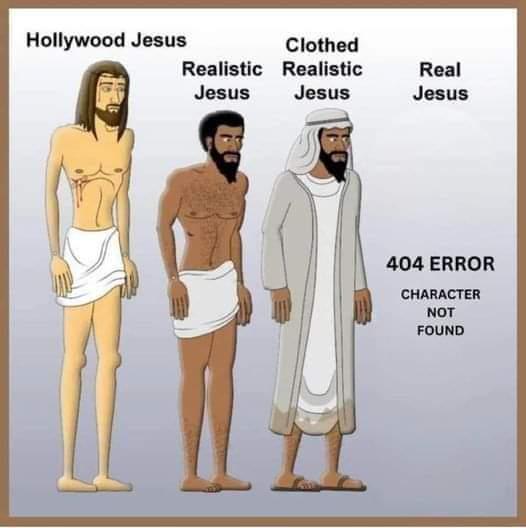

The consensus among historical scholars is that some itinerant preacher who we can reasonably call the historical Jesus existed. That is the state of the field. There was lots of religious fervor at the time, it was already probably clear to everyone that something bad was going to happen to the Temple, there were lots of similar guys running around.
Arguing that the man probably existed is not arguing that he advocated for the things he was saying in the Bible, that he was in any way divine, or that one should believe in Christianity. It’s not arguing for leftist hippie Jesus either. Just that at this point in history, some sort of Jewish rabble rouser claimed to be a messiah and started a small group of followers. This is not a crazy claim - rabble rousers exist, Jewish people exist and have a complex religious/political figure called a messiah, and the group of followers was causing problems in less than a hundred years.
Remember that historical argumentation and proof looks fundamentally different than argumentation and proof in physics or math. You can’t do “Josephus minus The Testimonium Flavianum plus Pliny’s letters equals Christ.” No one is going to be able to trot out a photo of Jesus. Although here’s something fun: here’s one of the first depictions of Jesus.
There’s a set of atheists who don’t stop at saying the Bible is full of contradictions. They feel the Bible must be wrong in every single aspect. This is a position just as fragile as fundamentalists–after all, some events like the sacking of Jerusalem by the Babylonians definitely did happen–and it’s completely unnecessary to disregard the bible as divinely inspired.
That’s dope that Jesus had one of those horse-heads masks all the way back then. Truly ahead of his time.
Dude was shitposting all the way to the end. Truly a man worth worshipping.
I like leftist hippie Jesus tho
The consensus is also that Mark at least somewhat more accurately represents the historical figure than the other gospels, which are all either fairly culturally Greek or Greek to the core (John).
What part of Mark? Give me the passage that references something that Jesus said or did that you are confident that he did say or do that thing.
I ask because I have no idea. Every time I try to do this I find out it happened in the OT or in Greek literature or in the letters or it served a selfish purpose for Paul.
It’s not that there is one part of Mark where we can say, “Oh yes, Jesus really said that specific thing.” It’s Mark presents what is called a “low Christology”. That is, Jesus was a guy, who was especially wise and holy, and therefore rose up and become somehow more than a man and imbued with the supernatural. This is what his followers almost certainly believed about him during his life and shortly thereafter.
Later gospels, especially John, present a “high Christology”: Jesus was with God on high and descended to earth and enlighten humanity, then went back to God.
It’s been awhile since I’ve read the Gospels but I believe that there are some things Jesus says in Mark, like, “Don’t preach to the Greeks”, or “Avoid the Sumerians” that are right on the money, so to speak, about what a Jew form Judea at the time would have said. These statements are generally ignored by the modern Church because they contradict Christianity’s catholic/universal current state.
It’s not that there is one part of Mark where we can say, “Oh yes, Jesus really said that specific thing.” It’s Mark presents what is called a “low Christology”. That is, Jesus was a guy, who was especially wise and holy, and therefore rose up and become somehow more than a man and imbued with the supernatural. This is what his followers almost certainly believed about him during his life and shortly thereafter.
It is possible the James community thought that way but Paul certainly didn’t. Also worth mentioning that Mark borrows the Latin fiction trope of the empty tomb meaning ascending to godhead. So even if Mark downplays Jesus while he was alive he makes him a god on his death.
Later gospels, especially John, present a “high Christology”: Jesus was with God on high and descended to earth and enlighten humanity, then went back to God.
Paul said nearly the same thing about a century earlier. What John added was the whole bit about the word. Paul does not talk about a normal person he talks about a celestial being who came to earth, did stuff, and unlike other humans (Paul didn’t believe in an afterlife) came back to life in heavenly body form. Which meant he was the new Adam.
It’s been awhile since I’ve read the Gospels but I believe that there are some things Jesus says in Mark, like, “Don’t preach to the Greeks”, or “Avoid the Sumerians” that are right on the money, so to speak, about what a Jew form Judea at the time would have said. These statements are generally ignored by the modern Church because they contradict Christianity’s catholic/universal current state.
I am being honest and not snarky at all here but I have no idea what you are talking about. I did double check this morning and saw nothing like this in Mark. Could you quote the passage?
No worries, I know you’re not being snarky!
My impression is that Mark and to some extent Matthew were probably written by Helenized Jews who may have even spoken Greek as a second language. They were not part of Paul’s proto-church.
But I really am not an expert. I will defer to you because I have the impression you are a bit more well read than me in this area.
No worries, I know you’re not being snarky!
My impression is that Mark and to some extent Matthew were probably written by Helenized Jews who may have even spoken Greek as a second language. They were not part of Paul’s proto-church.
But I really am not an expert. I will defer to you because I have the impression you are a bit more well read than me in this area.
It’s fine.
Mark I can’t really see it. He doesn’t speak Aramaic and makes some mistakes about Judaism. Matthew it is possible but he doesn’t seem to know Hebrew and speaks greek fluently. Plus Matthew is a bit antisemitic.
Really it is just easier to accept that they were outsiders looking in vs insiders who kept making mistakes.
Interesting. You make me want to find some time to read about all that stuff again.
Jesus almost certainly claimed that he and his twelve disciples were going to rule over the new kingdom of God (more or less a new era of the world in which suffering didn’t exist). We can be pretty sure because Judas then goes and betrays him, which we’re also very certain actually happened. No one has any idea why Judas flipped on Jesus, but we’re pretty dang certain he did. In any case, if Jesus really were everything people claimed about him later on, he wouldn’t have said all 12 of his disciples were going to be glorified in the next world.
Furthermore, we can be pretty certain John the Baptist really did baptize Jesus. My understanding of why is a bit more limited but basically that action put John in a higher position of authority than Jesus which would have been a big issue. Scholars think Jesus was originally a disciple of John.
Finally, Jesus probably actually was from Nazareth, because that town was basically like being from nowhere in those days. It would be strange to invent a story about a god and have them come from a podunk place, especially in those days where class mobility didn’t exist.
I’ll be honest though, if you’re going to come at me expecting a deep discussion, we’ve pretty much reached the limit of everything I know. I’m a very casual learner in this area.
Jesus almost certainly claimed that he and his twelve disciples were going to rule over the new kingdom of God
Prove it.
We can be pretty sure because Judas then goes and betrays him, which we’re also very certain actually happened.
Prove it. Also explain why Paul doesn’t seem to know about it.
Finally, Jesus probably actually was from Nazareth, because that town was basically like being from nowhere in those days. It would be strange to invent a story about a god and have them come from a podunk place, especially in those days where class mobility didn’t exist.
Not if you held to a doctrine that “the last shall be first and the first shall be last”. A very popular theme in Jewish mysticism. Plus it would explain why there is no Jesus family around to claim the throne, except for James.
Furthermore, we can be pretty certain John the Baptist really did baptize Jesus. My understanding of why is a bit more limited but basically that action put John in a higher position of authority than Jesus which would have been a big issue. Scholars think Jesus was originally a disciple of John.
Criteria of embarrassment is the term you are looking for. That thing almost never used outside of biblical studies since it is a weak argument. It doesn’t work here. John the Baptist was more well known than Jesus was at the time of Mark. By attaching Jesus to him it was just another form of name dropping. Additionally Mark has John still humbled in the role. So even less embarrassing for Christianity.
it was already probably clear to everyone that something bad was going to happen to the Temple
I actually think this was a recontextualization of what the original saying was about.
If you look at a Mark as a work, it has a bunch of what’s called in scholarship “didactic scenes” or “Markan sandwiches” where Jesus says something in public, and then suddenly off in private is giving further explanation to the disciples.
Look more closely at the part that’s said in public in Mark 13:1-2:
As he came out of the temple, one of his disciples said to him, “Look, Teacher, what large stones and what large buildings!” 2 Then Jesus asked him, “Do you see these great buildings? Not one stone will be left here upon another; all will be thrown down.”
The rest of the chapter is his private explanation to only Peter, James, John, and Andrew, where it’s suddenly very much about the temple.
But on its own, that first part could instead have been more like the theme of Shelley’s Ozymandias, that all buildings and works will eventually fall. Not a prophecy of imminent demise but the futility of escaping the ravages of time.
This is similar in tone to sayings attributed to Jesus in apocrypha, such as in the Gospel of Thomas, which has a non-linear view of time and depicts the world as already being a corpse (the work seems to connect to themes in Lucretius, who does state that the world is like a body that will one day die):
Jesus said, “Whoever has come to know the world has discovered a carcass, and whoever has discovered a carcass, of that person the world is not worthy.”
This isn’t the only place where an apocryphal Jesus seeming to be referring to contemporary philosophical ideas in a public statement is given a didactic scene in Mark.
For example, in Mark 4 you have the sower parable, which not only borrows Lucretius’s language referring to random interactions of seeds and what survives being what multiplies (Lucretius’s work explicitly described survival of the fittest, trait inheritance from each parent, and used the term ‘seed’ in place of ‘atomos’ as it was written in Latin and not Greek) - the parable literally refers to seed that failed to reproduce as “falling by the wayside of a path,” a turn of phrase Lucretius used in book 4 of his poem to refer to failed human reproduction. And in Thomas that parable appears immediately after one about how the human being is like a large fish being selected from small fish.
But suddenly in Mark, there’s a secret explanation (the only secret explanation for a parable in the work), where it’s about proselytizing.
One of the problems with Biblical scholarship is that there’s an extensive anchoring bias towards cannonical Christianity, and that’s on top of the literal survivorship bias around the texts themselves. (The only reason we have Thomas was a single person who buried the text in a jar around the time it became deadly to possess.)
Edit: In fact, a lot of this schism in the first century seems to be centered around the women disciples the canonical tradition tried to erase. If anyone’s interested, I can go a bit more into that.
The consensus among historical scholars
Argument from authority, logical fallacy. Also you don’t apply it consistently. The consensus among humanity (95%) is that the supernatural does exist. The consensus among Bible scholars is the resurrection is a real historical event and that Luke wrote the 3rd gospel.
it was already probably clear to everyone that something bad was going to happen to the Temple, there were lots of similar guys running around.
80 football fields in area and one of the most prominent locations of the Empire. By a lot you mean the 2 we know about I assume.
Arguing that the man probably existed is not arguing that he advocated for the things he was saying in the Bible,
We follow the evidence and build claims off of it. What you are doing here is taking a claim, and weakening it so you can sneak it in. It is no different than what the diests do. They continue to hide their God in smaller and smaller amounts of time and space and scope on the very edge of what we know. It also isn’t different than what astrology does. Used to be astrology predicted the paths of empires now it is predicts that parts of your personality. All pseudoscience and fake history follows the route of ever decreasing effects.
Remember that historical argumentation and proof looks fundamentally different than argumentation and proof in physics or math. You can’t do “Josephus minus The Testimonium Flavianum plus Pliny’s letters equals Christ.”
When we don’t have enough evidence we make no claims. We don’t weaken our standards of evidence.
Argument from authority, logical fallacy.
Actually not worth reading anything past this, literally just jerking off on your keyboard while sounding like an idiot.
Yeah kind of agree. Argument from authority isn’t even a fallacy, really; we do this shit every single time we go to a doctor’s office or hospital. Ad Verecundiam really has more to do with blindly trusted singular experts (without looking at consensus) or false experts.
We also utilize expert consensus in something called science and peer-reviewed journals.
Argument from authority is a fallacy. You are confusing what we do vs what we know.
We follow experts on things we do not have time to research ourselves as a practical means to live life. We don’t blindly accept something is true because an expert said it. I work with chemists all the time who knows more than me about their field. I follow them that doesn’t mean that literally every single thing they say I trust as wholly true.
We also utilize expert consensus in something called science and peer-reviewed journals.
Already explained this to you.
Now, the majority of experts on the Bible believe the resurrection is a true historical event. Do you believe this yes or no? If yes then why are you in an atheist area if no why don’t you blindly have faith in authority?
Brilliant rebuttal. I am very much convinced in your Messiah now. Man you Christian apologists are so clever.
The consensus among Bible scholars is the resurrection is a real historical event and that Luke wrote the 3rd gospel.
Lolwut, that never came up in my graduate religious historiography class.
Dude, I’m not going to get into endless arguments with you. You don’t have the reading comprehension. I’m pretty sure you’re not even 18 yet. It takes you about two comments to start accusing anyone who calls you a Christian.
I used to laugh at folks who suggested that atheists could be as fundamentalist and dogmatic as Christian’s are, but you’ve given me cause for pause.
Yes clearly if you never saw something in class it isn’t true.
You don’t have the reading comprehension.
Personal attack no evidence.
Okay, prove to me that the mainstream academic historical view is that Jesus was resurrected and that Luke wrote the third gospel.
And if you’d like to prove your reading comprehension skills, see how many comments you can make it before accusing me of being a Christian lol.
The one true JC

set DeusEx.JCDentonMale bCheatsEnabled True
And now he can do wonders, too.
I’m reinstalling
Aw shit, here we go again…
Dear Jesus. Not responding to every “prove it” remark. But look, you people know that just because the supernatural clearly isn’t real, does not mean that Jesus was not a real historical figure. No serious historian thinks he wasn’t real. Most who study this period of history believe he was a real apocalyptic preacher, who was killed somewhat unexpectedly by the Romans, and whose followers at least claimed to have visions of him after his death.
None of these things are particularly far out there claims. There are many apocalyptic preachers today, no today we don’t kill them, but their followers also often claim they’ve seen some crazy things.
I’m laughing at this functionally religious furvor we have going on in here. “Prove it!” Bruh, if old-ass writing that generally agrees with other old-ass writing isn’t good enough for you, might as well just throw out everything before about 1500 outside of China.
if old-ass writing that generally agrees with other old-ass writing isn’t good enough for you
Follow that to the logical conclusion and we’re expected to believe in the Great Flood myth, the existence of Angels, and the Aristotelian scientific theories of Four Elements and Four Humors.
Define generally agrees.
This is one of those silly arguments that only makes sense before you think about any detail of it. When you actually look at events in the narrative you start having to throw things out one at time until there’s almost nothing left - no trial. no last supper.no temple whipping, No feeding the 5000. No census…
1% Jesus isn’t Jesus, but if what you mean is that a real person inspired the foundation of the church then what you’re saying is they were able to make up a completely fictional account of every detail of a popular characters life - if they can do that then they why not just make him up entirely?
It is diesm all over again. Just keep making God do less and less until he doesn’t exist at all.
Because he was a real person, who was an apocalyptic preacher, was unexpected killed while Pontius Pilot was Governor of Judaea, and whose followers though they had visions of him after his death.
Supernatural things obviously aren’t real. But the historicity of this preacher we call Jesus of Nazareth, whose life inspired Paul to start what much later became the Catholic and Greek churches isn’t up for debate by anybody other than morons online.
Obviously essentially no details of any gospel is true. But that doesn’t mean the man did not exist, nor that the gospels aren’t interesting insofar as they elucidate aspects of the development of the early church and early Christian theology.
You can pretend it’s not up for debate but that’s not reality, there are plenty of very credible academics doubt the existence of a physical person as the inspiration.
Paul doesn’t even pretend to know anything about the real person so there’s no reason to imagine he needed a real person to have existed. For such a significant person don’t you think that the people who actually knew him would be prominent in the early church rather than totally vanishing from existence? There’s only Peter that has any claim of knowing Jesus and as soon as you start to look into that you start seeing red flags.
Early church history is fascinating and you’re doing yourself a great disservice to ignore the interesting side of things like where it all came from because you want to believe an easy fiction.
Credible academics in some humanities related field, sure. No expert on this period in history.
None whatsoever. Nope never happened in the history of the world.
No serious historian thinks he wasn’t real.
One of the big problems with “Historical Jesus” isn’t that “historians don’t think he’s real” but that “historicans can’t prove he is”.
The period covered by the Bible had a surplus of Messiah-esque figures who all kinda had some of the characteristics attributed to Big J. And Roman historians of the period who had made a point of writing histories of the region failed to mention any of the key events recorded in the early Christian scriptures.
Most who study this period of history believe
The prevailing view among most serious historians is simply “Not Enough Information”.
That said, a bunch of the more miraculous events attributed to the figure are common to prior religious icons - virgin birth, walking on water, loaves and fishes, raising the dead, exorcising demons - while the parables predate the “Historical Jesus” by centuries, as well.
So the task of “disproving” Jesus is as sticky as “disproving” Paul Bunyon. Which is to say its trivial to announce a 60’ tall man who formed the Grand Canyon with his axe isn’t real. But nearly impossible to prove “famous tall lumberjack” never existed.
None of these things are particularly far out there claims.
The thing that made Jesus stand out above the parables and the miracles was his famous walk into Jerusalem on Palm Sunday, his Last Supper, and his crucifixion. These are events that we find incredibly difficult to prove.
In fact, the entire historical record around Christianity as a faith is incredibly thin for its first 150 years.
To wrap your brain around this, consider if the modern American state had approaching zero preserved historical evidence of its existence until halfway Calvin Coolidge’s second term, in 1926. Then tag in claims that George Washington could fly and shoot lasers out his eyes. Or that Abraham Lincoln used a magic staff to part the Potomac and lead Confederate slaves out of bondage. Then try to have a conversation about “historical Presidents”. Imagine if the Constitution was revealed to James Madison on gold tablets that he found in a magic hat. How do you then take the Battle of Saratoga or the Gettsyburg Address or the Louisiana Purchase at face value?
This is the fundamental problem with “historical Jesus”. What records do exist are comically unreliable.
According to Paul he learned about the last supper in a dream and we know there was a popular fictional book in the empire that describes a last supper in a very similar manner.
Our historical evidence of the man is a dream based on a novel he had read. Not exactly a good argument
According to Paul
It gets worse than that, as the attribution to Paul is itself fuzzy. You’re talking about a possibly-historical figure recounting a dream based on a story that wasn’t properly codified until after Hadrian’s Wall had been in the ground for several decades
You think Paul was made up? That I find a bit surprising. What do you got?
You think Paul was made up?
I think you’re going to struggle to find any primary sources to support his existence. Even the Gospel of Mark is dated at around 70 AD, a solid 30+ years after the events it proposes to document. The Epistles all date to 175-400 AD.
Again, imagine if the only surviving copy of the US Constitution we had was composed under the Kennedy Administration.
The common assumption around the New Testament is that it was an oral tradition for at least a generation, and probably far longer. That’s plenty of time for a story to shift and spread. Was Paul an original Apostle of Jesus or was he an Evangelical living a 50 years later who had just appropriated the original Gospel messages? Was this a real person or a pen-name? One guy or a cult-branch of the new faith? A church leader who had people working on his behalf? A legacy heir writing on behalf of an elderly/deceased apostle father? A Roman convert using the name of an Apostle to engage in theological debate without exposing his identity to hostile state government?
Its all purely up for speculation.
Sure and coconut oil exists. No, it does not cure cancer. There for the type of coconut oil that cures cancer does not exist.
Yeshua Ben Hur existed. Jesus Christ, not so much.
Why are you booing me? I’m right!
No serious historian thinks he wasn’t real.
Do serious historians live in Scotland with True Scotsmen?
None of these things are particularly far out there claims. There are many apocalyptic preachers today, no today we don’t kill them, but their followers sure also often claim they’ve seen some crazy things.
Name a cult whose founder only preached for 6 months and the cult survived. Name one. You can’t. Because it never happens making your model of the events the ultimate black swan event in history. Extraordinary claims require extraordinary evidence
I find when people identify someone else’s usage of the “No True Scotsman” fallacy to be disingenuous, as if it’s impossible to make objective statements ever. No true historian promotes knowledge which hasn’t been proven. There is no evidence that a man named Jesus the Christ of Nazareth who could perform miracles and spoke to Pilate and was known throughout the kingdom as a troublemaker ever existed. There was a Yeshua Ben Hur who historically could be an avatar people can associate these fantastical tales with, but that would obviously not be real history.
Look no serious historian who studies that period of history believes this. You can think whatever you want and spew dumb rhetoric. But you’re incorrect.
Do serious historians live in Scotland with True Scotsmen?
Of course if I list off historians who do you then say “they aren’t serious”. We have moved from the argument from authority logical fallacy to the True Scotsmen fallacy.
Why don’t you just produce your evidence?
I remember reading about this.
IRC before Emperor Constantine there was still a bit of a religious taboo of portraying Jesus (a god), due to the whole bible being against idolatry thing. So it was mostly metaphorical images of a buff shephard, if there were pictures at all, because Jesus was a shephard to his followers, and buff because why wouldn’t you make him buff?
After Constantine converted, Christianity was romanised. The Romans loved idolatary so that taboo went out the window ASAP. The image of Jesus was partly inspired by images of Apollo and Dionysus (hence white, fit and feminine) then later Zeus (hence the authoritative beard). It’s not actually inspired by actual Jesus, whose appearance was (perhaps deliberately) not described properly in the New Testament. The Church basically adapted its product to the tastes of the Roman market, just like the whole Christmas tree and Saturnalia gift giving becoming Christian traditions.
Apparently there’s a similar thing in Islam, where a lot of the stuff that’s supposedly a core Islamic value, is just Arabic culture that predates Islam. Something that annoys non-Arabic Muslims. From what I can tell, Muslims are even more likely to pretend their religion came fully formed and never changed/adapted in its long history. Understandably, I tend to avoid discussing this with devout Muslims. LOL
Obviously, religious extremists can’t admit that their religion changes and adapts, or they’d have to admit that that one value they think is really important might be changed too or that their religious texts aren’t the inerrant word of their god. Which is probably one of the reasons why different religious sects love to fight each other over stupid shit, rather than admit that they’re both the same religion, but just a bit different based on local tradition and history because their religious texts were written by humans not gods.
Or at least, that’s my theory.
Scientifically, he was probably a real dude.
Probably, but there were tons of apocalyptic Jews at the time. Did any of them turn water to wine, rise from the dead, etc? Nah
Ronald Reagan didn’t do most of the things that his followers believe either but saying Regan wasn’t real is getting reeeealy existential.
Prove it
You forgot supply-side Jesus

Is that a bottle of, uh, personal lube?
It’s a candle, but I suppose if you’re real determined…
I made American Jesus

No no, that’s the People’s Liberation Front of Judea.
I see him on the interstate.
He is undecided as to whether he prefers a straight or a banana mag.
A band called Bad Religion did, too! EDIT: On a second thought and based on the replies, I guess you knew from the start. Aaaanyway.
I finally got to see them last spring at punk rock bowling. They’re pretty old now, but still a good show.
Old but always relevant
He’s the force the army wields.
LMAO
Jesus was a cave man from the upper paleolithic era who survived and studied under the Buddha, then went west to try and spread those teachings, and was unintentionally ascribed godhood by his followers.
If you got that reference, I’ll buy you a drink of your choice should we ever meet.
What a great movie! I’m not the one for rewatching movies, I’ve seen this one three times, so yeah… That’s a lot for me
What’s the movie?
I know there are a lot of people that think Jesus was buddhist so I thought it was about that
“Man from Earth” good luck finding it if you don’t sail the high sea’s
Anything that says IPA on it I tend to like but really my favorite beer is free, so just whatever you want to get me. It is the Man from Earth. Not really a great movie. When he said John T. Party from Boston a little part of me died.
You know what one really annoying thing, amongst many, with that movie is? There are connections between the Buddha and the Gospel Jesus. However, with the sole exception of the Golden Rule, all the details are biographical. Which hints really strongly that it is just a typical way the human mind likes a story since presumably if there was a connection between the Gospel writers and Buddhism they would have his teachings instead of his biography.
Nah that movie was great for what it was. Literally one set and some of the acting was really bad but the writing makes up for all of it. Anybody who appreciates dialogue in Cinema should check it out if you haven’t already.
I don’t understand your point trying to disprove connections between Buddha and Jesus. Jesus’ part of the Bible does have his teachings. If Jesus and the Bible were real, the “biography” is basically a supercut of all the times he learned a lesson, taught lessons to others or performed miracles (sometimes the last two are the same). So I don’t understand how you’re saying his “biography” doesn’t have his teachings. But even without my explanation, I don’t see a 1+1 equation from what you said.
Nah that movie was great for what it was. Literally one set and some of the acting was really bad but the writing makes up for all of it. Anybody who appreciates dialogue in Cinema should check it out if you haven’t already.
Ok you know what? I am going to walk that back. If you enjoyed it I am happy for you. I didn’t. And that is okay.
I don’t understand your point trying to disprove connections between Buddha and Jesus. Jesus’ part of the Bible does have his teachings.
Hmm perhaps you can provide a few?
But even without my explanation, I don’t see a 1+1 equation from what you said.
A man was in heaven and came to earth to help humanity. Before his birth a magical man tells the parents that he will be great. He leaves home a bit before age 30, wanders in the wilderness for about 2.5 years. Encounters a being with red skin and horns on his head who tempts him three times. The man outwits this avatar of temptation. The man comes to a place where people have gathered and he gives a short speech which becomes one of the most significant speeches of all time laying out his entire philosophy. Of those that listened some became his first followers.
He travels around with 12 followers. He fights with the religious and political figures of his day. Befriends criminals and the outcasts of society. Has a difficult experience at the temple one day and is betrayed by one of his men. He spends his last day telling people to forgive the one who killed him and speaking to his youngest follower about taking over. The man dies and three days later the body is moved.
I am of course telling you the story of the Buddha recorded in the 6th century BCE.
Now there are parallels which I am sure you see. The thing is I don’t see teaching parallels. So if the Gospel writers were familiar with the story of the Buddha I find it weird that they were familiar with any of the teachings of the man. Nothing Jesus taught was groundbreaking, it was all available in earlier Jewish works. It would be pretty impressive if Jesus had started for example talking about the Wheel of Becoming or the eightfold path.
Okay thanks for explaining it further. I misunderstood what you said and therefore you misunderstood something I said. I’m definitely dumb and you are probably right about their teachings not being similar. I would say the golden rule is enough for me but I can definitely see why it would feel dumb for someone more educated in the subject. That happens a lot in movies and even more in TV
You aren’t dumb. We disagreed that is not the same thing at all. Best of luck to you
Well I didn’t understand you were saying Jesus didn’t teach Buddha’s teachings. I thought you were saying the Bible didn’t have Jesus’ own teachings. Use of the word “him” in various places is where my confusion came from. That’s what qualifies me as stupid. The only thing we disagree on if whether Man from Earth is good.
Nah, Jesus existed.
A lot of people were called Jesus back then.
Jesus of Nazareth on the other hand …
A lot of people were called Jesus back then.
Still are, I know a bunch of Jewish dudes named Joshua.
There are a lot of Hispanic dudes named Jesus as well.
I was aiming for that authenticity factor, though. I feel like a Jewish dude named Joshua is closer to the original than a South American dude with a Greek translation of the name.
Darkmatter2525?
I’m “white” and look like the dude in the middle.
Honestly we need to stop using the words “white” and “black” to refer to skin. All the humans I’ve ever seen are brown. Maybe we should call albinos “white people”. Maybe. Probably not.
Jesus on the left looks like he’s got jaundice.
Yeah, yellow Jesus looks like his liver failed… didn’t even make it to the cross…
Confirmed John Cena is Jesus.
Palestinians can be quite pale skinned though. Maybe a degree in between the two Jesii here
Must be one of those transitional forms I keep hearing about from creationists
Jesus was not Palestinian. He was Judean.
Modern Palestinians are basically Arabized Judeans.
I’m about as atheist as they come, but it seems pretty settled history that the man existed and was politically impactful
He was most likely a real guy. But a guy Christian’s would absolutely hate: a brown Communist Palestinian who hung out with prostitutes, lepers, pariahs, refuted the legitimacy of the state, and organized massive mutual aid events to feed the poor. Probably a good dude. It’s a shame his followers are dicks though.
I’m an anti-theist, and I used to be on this page, but a while ago I read about how even this might not be true. We don’t have any real proof he existed at all.
Where’d you read that? Here are at least the known sources: https://en.m.wikipedia.org/wiki/Sources_for_the_historicity_of_Jesus
There’s way less evidence of a ton of historical figures and events that are taken for granted as established history. Just my two cents
Right. It’s applying the same standard of evidence that we use for everything else on history. Truth is, we don’t have great evidence for pretty much anyone who wasn’t a regional ruler. If you rose the standard much higher, you’d end up with history being a big blank, and that’s not useful.
In other words, if you reject a historical Jesus outright, you also have to reject Socrates and Spartacus and a whole lot of others.
and events that are taken for granted as established history. Just my two cents
Very well. Please list one that is as big as a claim. Remember extraordinary claims require extraordinary evidence
The other person who responded before you listed Socrates and Spartacus, who both have fewer sources for their existence. Another is Hannibal Barcus and the Punic Wars, our knowledge of which is almost entirely based on the account of Polybius. There are a ton of others, you’re welcome to read history. There is nothing extraordinary about whether or not Jesus Christ existed vs any of these other people, at no point are we discussing anything metaphysical here
None of those three are as big as a claim.
There is nothing extraordinary about whether or not Jesus Christ existed
Bull. Even people decades later who opposed Christianity noticed it. Wondering why anyone would follow a dead leader. A regular guy could not have inspired multiple generations of followers when he hadn’t setup any institutions and only preached for about 6 months. If however James made it up and he lived until he was an old man that would explain it.
Ok
Aye DarkMatter2525