BLS built hedonic models for goods and services in several areas including apparel, electronics, and housing for CPI and for computers and, more recently, broadband services for PPI.
So the “price” includes adjustments to imagine what a 50" flat panel might have cost of it had been possible back then. So a $200 dollar 50" flat TV that a single person can carry is extrapolated to be worth $10,000 back then, which at least in that case I can say sure. The minimum viable TV of 2000 no longer has anyone making that crappy, so you don’t see TVs under $10 new.
But it does mean that many of these rates might be “nicer” than presented.
Might only be comparing equal screen sizes, which would mean the better TVs of the 2000s are being compared to what are basically computer monitors today. And yeah, the cost of those now is negligible compared to an actual common mid-sized (let alone large) TV of today.

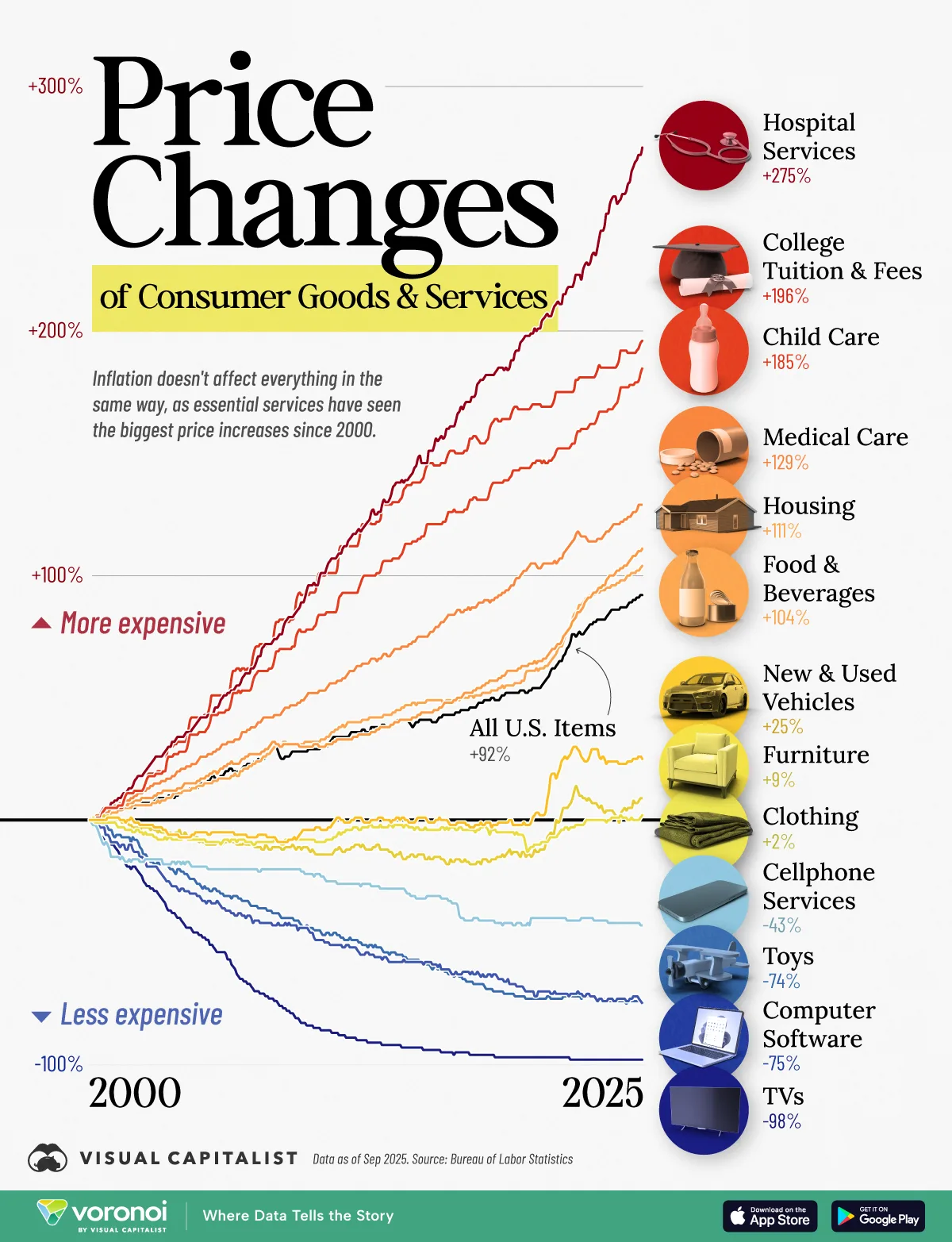
TVs only cost 2% of what they did in 2000?
Ok. Did some digging and found:
So the “price” includes adjustments to imagine what a 50" flat panel might have cost of it had been possible back then. So a $200 dollar 50" flat TV that a single person can carry is extrapolated to be worth $10,000 back then, which at least in that case I can say sure. The minimum viable TV of 2000 no longer has anyone making that crappy, so you don’t see TVs under $10 new.
But it does mean that many of these rates might be “nicer” than presented.
Might only be comparing equal screen sizes, which would mean the better TVs of the 2000s are being compared to what are basically computer monitors today. And yeah, the cost of those now is negligible compared to an actual common mid-sized (let alone large) TV of today.
Even small tvs are not $6. Math is off.
But good luck finding any TV for 300 bucks in 2000. TVs were expensive back then.