

cross-posted from: https://sh.itjust.works/post/53581443
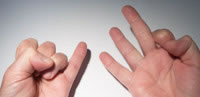
YSK You can count past 1,000 on your fingers by using binary, instead of just 10
With just one hand, you can count to 31, and with both hands you can reach a whopping 1,023. This is because the placement of the held up fingers matters, rather than the amount.
It can be very useful in everyday use, being able to count to huge numbers when you don’t have your phone or pen and paper nearby.
Uhh, 100 uses 3 digits.
True.
But, two thumbs up = 100 and no fingers up at all = 0.
It’s like rolling “1d100” in D&D. Unless you actually have a 100-sided die (a ball with a weight in it so it eventually stops with a number up), you roll 2d10 and declare in advance which one is the tens place (some have a zero at the end of each digit, so that’s tens by default). That gets you 1-100 with no zero option.
So, you’re right that two digits have 100 numbers, 0-99. The dice system has 100 numbers, 1-100. The hand system I described goes 0-100. So technically one of those is a 3 digit number. But, the system allows it and doesn’t (easily) allow any more 3 digit numbers.
So how would you distinguish this from 55?
Yeah, I think they’re confusing themselves a little bit. Which is unfortunate because it’s a pretty good system actually, it just counts 0-99 not 0-100 like they’re claiming.