

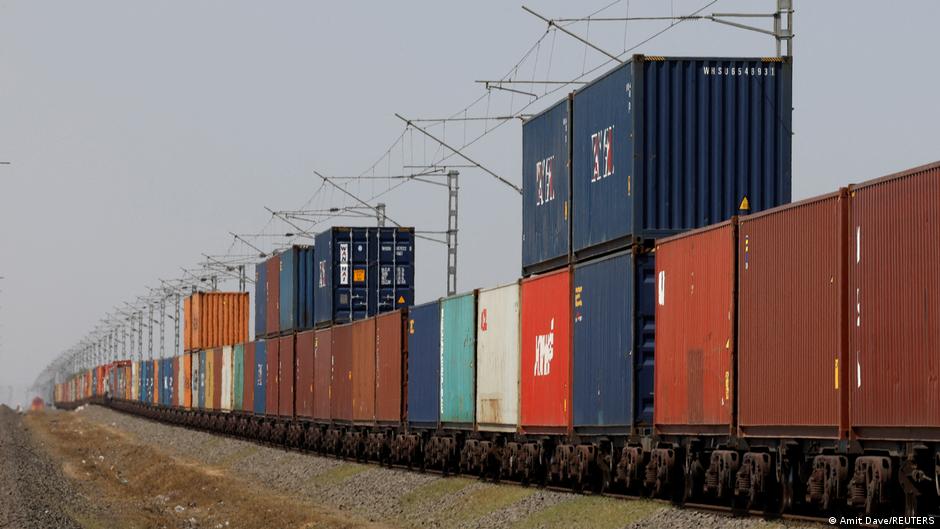
India has pushed ahead of Japan as the world’s fourth-biggest economy after sustained high growth, New Delhi says. Economic pace has apparently picked up more quickly than expected and India may soon claim third place.
I’m always impressed how high up this country of 120 million people is, even after 2 decades of stagnation.
We had an economy‽
Japan’s government debt climbs to record ¥1.32 quadrillion
My understanding from past reading is that Japan has an unusual situation where the Japanese public basically lends the government a lot of money at fairly unfavorable-to-the-public rates.
searches
https://www.stlouisfed.org/on-the-economy/2025/apr/what-is-behind-japan-high-government-debt
Based on a skim of this, it sounds like a lot of the Japanese public basically lends their assets to the government, while getting fairly unrewarding returns for them.
Then the government takes those assets and goes and invests the assets in riskier things abroad and makes a bunch of money by doing so.
-
First, as of the second quarter of 2024, Japan’s net public liabilities on the consolidated balance sheet amounted to only 78% of GDP. While gross liabilities stood at 270% of GDP, the government also held substantial assets totaling 192% of GDP.
-
Second, a significant portion of these assets were invested in high-return, riskier assets such as domestic equities, foreign equities and foreign bonds. Liabilities primarily consisted of low-return instruments like bank reserves and government bonds. This resulted in a return spread between government assets and liabilities. Despite having a net liability position, the high returns on riskier assets exceeded the government’s funding costs, generating a substantial positive return on Japan’s balance sheet.
So, I don’t know why the Japanese public is so willing to lend to the government at poor rates of return. Maybe cultural, maybe driven by tax law or other policy.
But from the standpoint of looking at the country in aggregate, it doesn’t sound so bad. Basically, the Japanese government has a lot of public debt because it’s chosen to take out debt from the public, who is willing to lwnd to it and makes a return by investing those assets. It’s not because it’s just spending beyond its means. High debts but also high assets and those assets have made a solid return.
There’s also some other material in the article about how another part of it is due to some unusual financing structure, but I haven’t read about that before, and don’t have familiarity with it.
The Japanese public are definitely not willing to lend to the government at such low interest rates. The majority holder of Japanese bonds is the Bank of Japan, who needs to purchase large amounts of bonds to conduct its monetary policy. This has lead to some accusations of the two having an incestuous relationship, when central banks are supposed to be independent.
Before the Bank of Japan started hiking interest rates, most Japanese people were stuck in a liquidity trap, where they had to pay to store money in the bank. This was due to a combination of low/negative interest rates, and lots of banking fees due to the oligopolistic banking sector. 7-eleven (the convenience store) bank is unironically the fastest growing bank there, in no small part because they were the only bank with a wide ATM network which didn’t charge fees during business hours.
It is certainly… interesting that the Japanese government, with access to such cheap credit, decides to invest it abroad for higher returns, rather than invest it domestically and pursuing structural reforms to improve its own growth, and in doing so perpetuating the spread between government assets and liabilities.
FYI there are a lot of investors who do this exact trade, i.e. borrow cheap money from Japan, and invest it abroad.
The Japanese public are definitely not willing to lend to the government at such low interest rates. The majority holder of Japanese bonds is the Bank of Japan, who needs to purchase large amounts of bonds to conduct its monetary policy.
But that capital that the bank is providing the government with is from the Japanese public, yes, who are lending it to the bank for a low return?
searches
https://www.ft.com/content/23b560a4-f0f1-44a9-94af-88d4807211f4
Even after 30 lean, post-bubble years, Japanese households hold ¥2.1 quadrillion ($14.7tn) of financial assets, of which more than half ($7.7tn) is held in cash and deposits.
By contrast, households in the US and UK respectively hold 13 and 31 per cent in deposits.
In national terms, Japan’s cash savings alone are equivalent to the combined annual gross domestic product of Germany and India. In corporate terms, Mrs Watanabe could buy Apple, Microsoft and Saudi Aramco with what she has sitting (earning almost zero interest) in the bank.
When prices in Japan were stagnant or falling, as they were for most of the past 25 years, Mrs Watanabe’s preference for holding the majority of savings in cash was reasonable, especially so after the government guaranteed bank deposits in 1995.
The central bank’s long experiment with ultra-low interest rates, which began in the late 1990s, meant she was not making any returns, but nor was her wealth being significantly eroded as long as Japanese companies held back from raising prices.
I think you misunderstand what the Bank of Japan is. It is a central bank, so it does not take deposits from households, and buys government debt by controlling money supply (i.e. printing money). It holds around 46% of Japanese government debt, far more than domestic insurance companies and domestic banks (~15% each).
-
It’s a useless metric.
Lmao. Japan’s population is 1/10th that of India. Fucking pathetic to celebrate this as some kind achievement.
It’s better than what it was yesterday. Isn’t that reason enough to celebrate?
What should it have done instead, moan that it grew?
better
Debatable.
I don’t think so. It objectively grew, number wise.
Ah yes. Line goes up. Who cares if it did anything for the people.
You are right, but that’s a different topic. What the point is that it at least improved in one parameter.
It didn’t do anything for the people yesterday, and It’s also not doing anything for the people today, but at least the line went up.
And Germany is 3rd (up from 4th a few years ago), yet you see an article daily about their crumbling economy.
Sooo…it’s not India going up, it’s everything above it crashing down? xD
Removed by mod