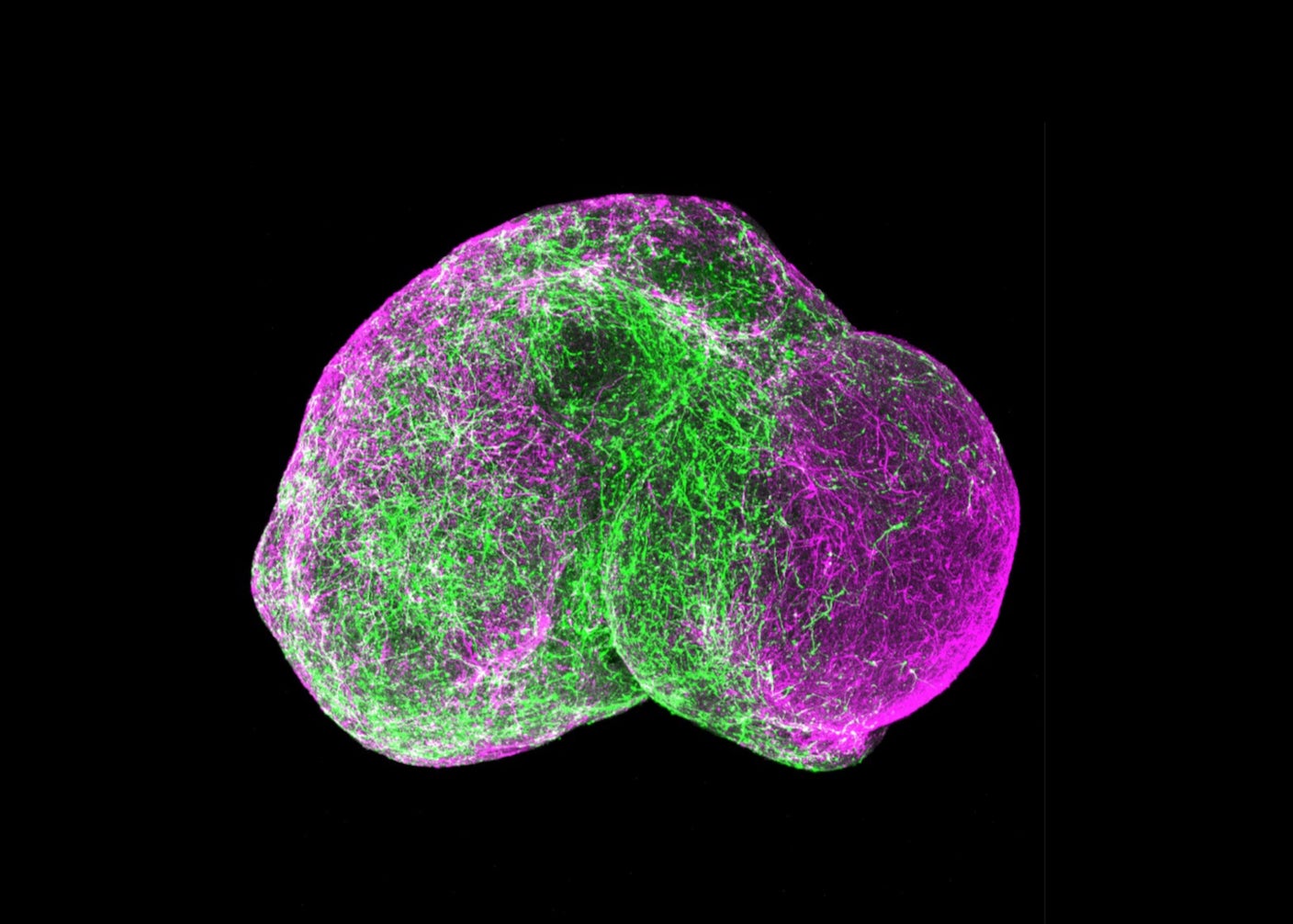
In older organoids, progenitor cells—these are young cells that can form different types of brain cells—quickly decided what type of brain cell they would become. But in younger organoids, the same cells took time to make their decision. As the blobs grew over an astonishing five years, their neurons matured in shape, function, and connections, similar to those of a kindergartner.
Those last few words just seems like irresponsible writing for the sake of clicks. It’s a sudden leap from a dry discussion of cell structures to something that’s designed to shock and elicit an emotional reaction. But the author doesn’t add anything to explain the comparison, so we aren’t given any tools to evaluate the claim or its implications. It feels manipulative.
These also have no real inputs and outputs, so it’s hard to see how they could have some kind of consciousness. Still, brain organoids have been a source of ethical debate since the beginning. The assembloid things mentioned sound a little riskier yet.


Those last few words just seems like irresponsible writing for the sake of clicks. It’s a sudden leap from a dry discussion of cell structures to something that’s designed to shock and elicit an emotional reaction. But the author doesn’t add anything to explain the comparison, so we aren’t given any tools to evaluate the claim or its implications. It feels manipulative.
These also have no real inputs and outputs, so it’s hard to see how they could have some kind of consciousness. Still, brain organoids have been a source of ethical debate since the beginning. The assembloid things mentioned sound a little riskier yet.