Every letter in spanish is always pronounced with regular rules. You don’t have to guess. Things like “pingüino” and the u having the diaresis makes it obvious that you have to pronounce the u in the word vs “quitar” where you don’t pronounce the u.
Just because you can pronounce s and c the same and c and k the same doesn’t make it bad orthography.
Just because you can pronounce s and c the same and c and k the same doesn’t make it bad orthography.
yes it does
Source : Turkish speaker.
EDIT : It’s not just s c and k, q also gets involved. LL and Y and some variations having J and G enter into it, the constant H letters that don’t get pronounced, etc etc.
No romance language can say anything about being “regular” from an orthographic sense.
No it really doesn’t. The joke is about not knowing how to pronounce a word when you read it. That isn’t a problem in spanish because the rules are exact on how the words are pronounced. You can read any word in spanish no matter how complicated or new and as long as you know the spanish pronunciation rules and it isn’t a foreign word you will know how to pronounce it. Foreign words, like foreign words in most languages, don’t usually follow spanish orthography so those are a crap shoot.
Edit:
It’s not just s c and k, q also gets involved. LL and Y and some variations having J and G enter into it, the constant H letters that don’t get pronounced, etc etc.
All those things are completely regular. They vary in pronunciation by dialect but every person with the same dialect will pronounce the word the same when they read it.
well, when you know how to pronounce a word, or are told a word through speech, you are familiar with it as a sound. being able to take characters and turn them into sounds is a transformative process that has rules and such, yes, but when they are encoded into sounds, trying to get them into text doesn’t necesarily have the same amount of information. The distinction between c,s , k and q just turn into s and k sounds, which need to be sorted into c,s,k and q letters.
Quota and Cualquier have data loss. you need to choose which letter the K sound turns into, and the rules are gone at that point.
Otherwise you would never need a dictionary to spell things, because it would be orthographically perfect. If you knew how a word sounded, it would be a 1 to 1 mapping.
There are non-romance languages that work like this, turkish, germanic languages, and I assume, Indonesian and Malay. Ironically, despite being the source of romance languages none of them (maybe romanian?) are able to have orthographic consistency.


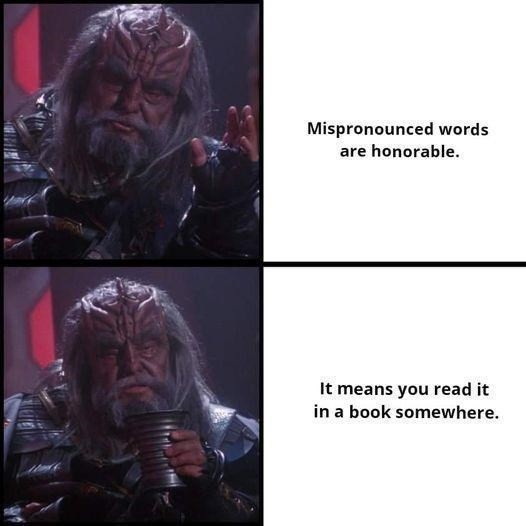
que necesitas para entender que esto es algo falso? Un Casco?
Every letter in spanish is always pronounced with regular rules. You don’t have to guess. Things like “pingüino” and the u having the diaresis makes it obvious that you have to pronounce the u in the word vs “quitar” where you don’t pronounce the u.
Just because you can pronounce s and c the same and c and k the same doesn’t make it bad orthography.
yes it does
Source : Turkish speaker.
EDIT : It’s not just s c and k, q also gets involved. LL and Y and some variations having J and G enter into it, the constant H letters that don’t get pronounced, etc etc.
No romance language can say anything about being “regular” from an orthographic sense.
Redundant can still be regular. It may not be easy to write, but it’s easy to pronounce.
No it really doesn’t. The joke is about not knowing how to pronounce a word when you read it. That isn’t a problem in spanish because the rules are exact on how the words are pronounced. You can read any word in spanish no matter how complicated or new and as long as you know the spanish pronunciation rules and it isn’t a foreign word you will know how to pronounce it. Foreign words, like foreign words in most languages, don’t usually follow spanish orthography so those are a crap shoot.
Edit:
All those things are completely regular. They vary in pronunciation by dialect but every person with the same dialect will pronounce the word the same when they read it.
and is there any data loss that happens when pronounced words are written using these rules?
Why would there be? If you know how to read then you know how to write because again, spanish is completely regular in that aspect.
so you never have had to double check how to spell something in english or in spanish?
When did I say that ?
well, when you know how to pronounce a word, or are told a word through speech, you are familiar with it as a sound. being able to take characters and turn them into sounds is a transformative process that has rules and such, yes, but when they are encoded into sounds, trying to get them into text doesn’t necesarily have the same amount of information. The distinction between c,s , k and q just turn into s and k sounds, which need to be sorted into c,s,k and q letters.
Quota and Cualquier have data loss. you need to choose which letter the K sound turns into, and the rules are gone at that point.
Otherwise you would never need a dictionary to spell things, because it would be orthographically perfect. If you knew how a word sounded, it would be a 1 to 1 mapping.
There are non-romance languages that work like this, turkish, germanic languages, and I assume, Indonesian and Malay. Ironically, despite being the source of romance languages none of them (maybe romanian?) are able to have orthographic consistency.