In a roundabout way. If Chemistry 1 is a required class for graduation and you fail it, you either have to repeat it or don’t get to graduate. That’s how it used to be, now there’s much more pressure to pass everyone no matter what, due to school funding being directly tied to pass rates.
But what I’m asking is, who decides if you pass chemistry 1?
In my country you would take a standardised chemistry 1 exam paper at the end of the year that everyone in the country doing chemistry 1 would take and would get a grade based on how well you did, and if you get less than like 40% you would fail.
In the US can the teacher just decide after the test what a passing grade is?
due to the fuckass limpdick way the US has setup it’s federal system, the answer to this is the same as it is to most “how is X in the USA” questions…it depends.
in many parts of the country, individual teachers have very wide leeway to pass/fail people (and are heavily incentived to just pass anyone)
You could do all the work or none of it and it is up to them to say “pass” or “fail” by giving you a grade
After a test you could “round” the grades. Like if it was a very hard test and the highest grade was a 60%. You could round everyone’s test up by 40%.
If you made a 0%, now you have a 40%. Everyone passes!
(Don’t think this is too common, but plausible)
Teachers are “encouraged” to not fail any student by a lot of pressures.
You have to go above any beyond to fail high school. Trying hard and getting bad grades will generally get you enough to pass. Teachers will “work” with you.
Many ways to do it. But that example where the best student scored a 60%. Everyone would get +40%. That’s a Standard Curve method.
Personally, they didn’t curve a lot of grades when I was in high school. It was more a college thing. A hard test that pushes the limit of your knowledge without being unfair.
But yes a grade can change afterwards for whatever reason the teacher wants. They could just throw on 10% if they felt generous. Definitely apparent when it’s like a writing assignment without clear right or whole answers like math.
There are no universal American standardized tests for most required subjects. The standardized tests that do exist vary wildly because they are not federally standardized but instead determined on a state level. Generally they include math and reading. Some states test science, some don’t. Some test every year, some do intervals. It’s a mess.
Like in Pennsylvania reading and math are assessed yearly grades 3-11 but science is only done grades 4, 8, and once in high school (just has to be passed to graduate and only covers biology, year you take it can vary as a result). However, some states like Texas and California assess science every year. Some states like Arkansas and North Carolina use course work and final exams to determine proficiency
Here in Belgium we don’t have any standardized tests either. It’s less hassle and allows for more flexibility for teachers and schools (the difficulty can vary wildly between schools).
I think that the literature says standardized tests are better, but our education is (was?) among the best, so I don’t think it’s a deciding factor.
Freedom of education is a big thing here, the government only can give a rough overview of what teachers should teach. For better or worse, standardized tests would never fly here.
But the schools all want to be amongst the best. So the quality is pretty high up. Haven’t heard of anyone whose degree was questioned because they came from a “bad school”. There will be at least some bar they will have to meet somewhere.
Though degrees from some schools are more appreciated than others.
Anyone can start a school, that is a right guaranteed by our constitution. It comes from a time where the Liberals were afraid of Catholics interfering in their education and vice versa so they limited the power the government has over education. And looking at what’s happening in the world, it still seems relevant to me.
Being able to hand out recognized diploma’s and receiving government subsidy is a bit more difficult, but also far from impossible and you can always send your students to the government organized exam center.
So if it’s not standardised, does that mean people pay more attention to where you went to school Vs the grade you got?
If you’re going to university/college it doesn’t really matter since you just enrol (or take an entrance test for a few majors). Of course, your chances of getting through will depend on the school you went to.
If not, I suppose yes. But isn’t that the same as everywhere else, or do you also have national exams for trades?
Things have changed since I went to school so I can’t give you the exact details of how it works now, but whether you pass a class or not in most US schools is/was based not only on how well you do on a standardized test at the end of the semester*, but also how well you did on class work and tests during the semester. If you bomb everything it’s possible to get into a hole where even if you do great on the final exam, it still might not lift you up to a passing grade, depending on how all the assignments are weighted. So the teacher decides all of your in class grades, which determine if you pass or fail.
* I’m actually so old that we didn’t even do that when I was in school, and now I couldn’t tell you if the standardized tests are national or state based.


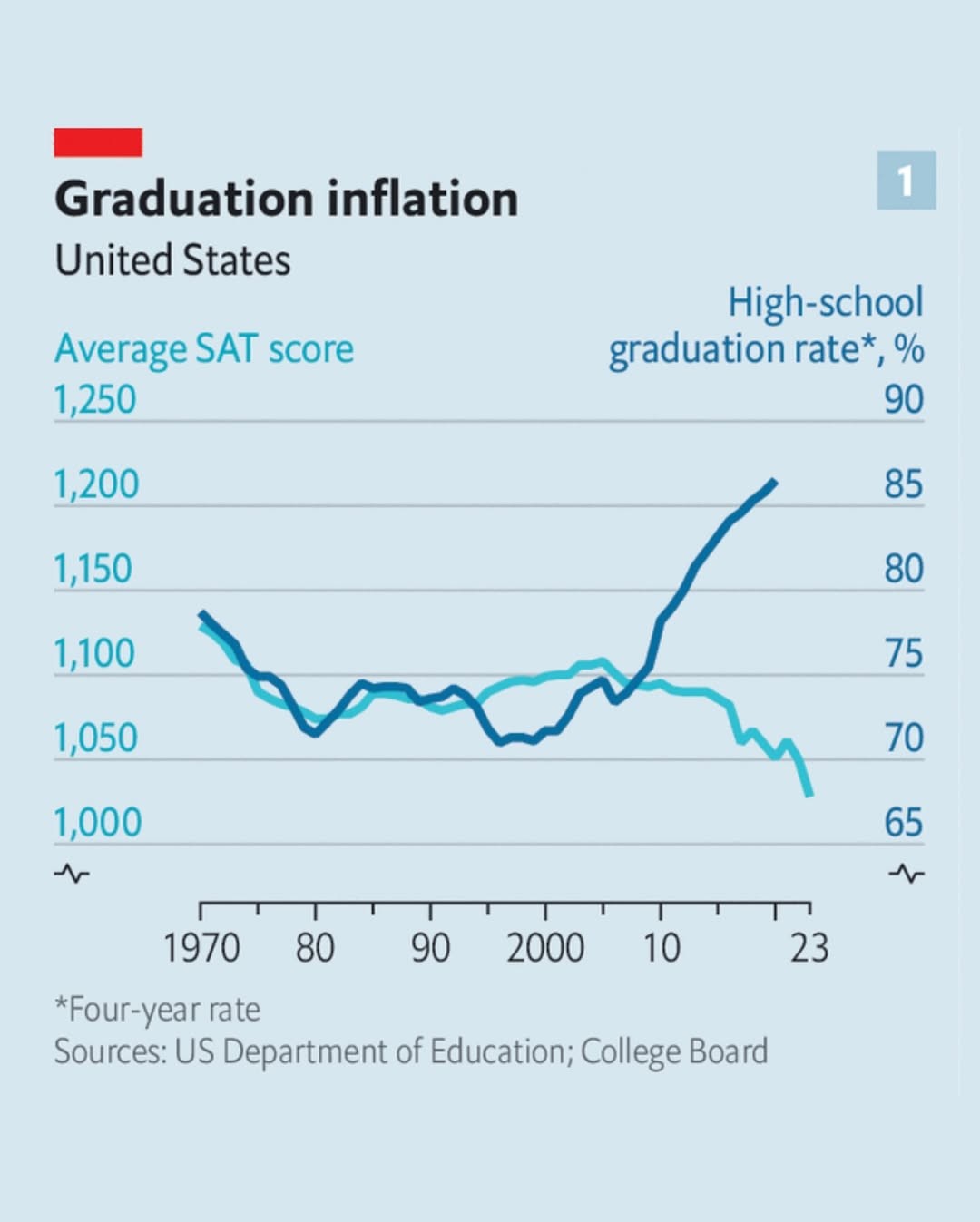
In a roundabout way. If Chemistry 1 is a required class for graduation and you fail it, you either have to repeat it or don’t get to graduate. That’s how it used to be, now there’s much more pressure to pass everyone no matter what, due to school funding being directly tied to pass rates.
But what I’m asking is, who decides if you pass chemistry 1?
In my country you would take a standardised chemistry 1 exam paper at the end of the year that everyone in the country doing chemistry 1 would take and would get a grade based on how well you did, and if you get less than like 40% you would fail.
In the US can the teacher just decide after the test what a passing grade is?
due to the fuckass limpdick way the US has setup it’s federal system, the answer to this is the same as it is to most “how is X in the USA” questions…it depends.
in many parts of the country, individual teachers have very wide leeway to pass/fail people (and are heavily incentived to just pass anyone)
The teacher can pass or fail you
You could do all the work or none of it and it is up to them to say “pass” or “fail” by giving you a grade
After a test you could “round” the grades. Like if it was a very hard test and the highest grade was a 60%. You could round everyone’s test up by 40%.
If you made a 0%, now you have a 40%. Everyone passes!
(Don’t think this is too common, but plausible)
Teachers are “encouraged” to not fail any student by a lot of pressures.
You have to go above any beyond to fail high school. Trying hard and getting bad grades will generally get you enough to pass. Teachers will “work” with you.
So the kids own teachers mark their exams and can just arbitrarily round up tests so that no one fails after the kids have already taken the exam?
Sorry it is called Curve Grading.
Curve Grading
Many ways to do it. But that example where the best student scored a 60%. Everyone would get +40%. That’s a Standard Curve method.
Personally, they didn’t curve a lot of grades when I was in high school. It was more a college thing. A hard test that pushes the limit of your knowledge without being unfair.
But yes a grade can change afterwards for whatever reason the teacher wants. They could just throw on 10% if they felt generous. Definitely apparent when it’s like a writing assignment without clear right or whole answers like math.
There are no universal American standardized tests for most required subjects. The standardized tests that do exist vary wildly because they are not federally standardized but instead determined on a state level. Generally they include math and reading. Some states test science, some don’t. Some test every year, some do intervals. It’s a mess.
Like in Pennsylvania reading and math are assessed yearly grades 3-11 but science is only done grades 4, 8, and once in high school (just has to be passed to graduate and only covers biology, year you take it can vary as a result). However, some states like Texas and California assess science every year. Some states like Arkansas and North Carolina use course work and final exams to determine proficiency
Here in Belgium we don’t have any standardized tests either. It’s less hassle and allows for more flexibility for teachers and schools (the difficulty can vary wildly between schools).
I think that the literature says standardized tests are better, but our education is (was?) among the best, so I don’t think it’s a deciding factor.
Freedom of education is a big thing here, the government only can give a rough overview of what teachers should teach. For better or worse, standardized tests would never fly here.
That sounds good if it works, but presumably you still leave mandatory education with some kind of official qualification right?
So if it’s not standardised, does that mean people pay more attention to where you went to school Vs the grade you got?
Yes, it is somewhat school dependent.
But the schools all want to be amongst the best. So the quality is pretty high up. Haven’t heard of anyone whose degree was questioned because they came from a “bad school”. There will be at least some bar they will have to meet somewhere.
Though degrees from some schools are more appreciated than others.
Anyone can start a school, that is a right guaranteed by our constitution. It comes from a time where the Liberals were afraid of Catholics interfering in their education and vice versa so they limited the power the government has over education. And looking at what’s happening in the world, it still seems relevant to me.
Being able to hand out recognized diploma’s and receiving government subsidy is a bit more difficult, but also far from impossible and you can always send your students to the government organized exam center.
If you’re going to university/college it doesn’t really matter since you just enrol (or take an entrance test for a few majors). Of course, your chances of getting through will depend on the school you went to. If not, I suppose yes. But isn’t that the same as everywhere else, or do you also have national exams for trades?
a fail is 40% now?
Fuck me.
Things have changed since I went to school so I can’t give you the exact details of how it works now, but whether you pass a class or not in most US schools is/was based not only on how well you do on a standardized test at the end of the semester*, but also how well you did on class work and tests during the semester. If you bomb everything it’s possible to get into a hole where even if you do great on the final exam, it still might not lift you up to a passing grade, depending on how all the assignments are weighted. So the teacher decides all of your in class grades, which determine if you pass or fail.
* I’m actually so old that we didn’t even do that when I was in school, and now I couldn’t tell you if the standardized tests are national or state based.