Ah good point, I assumed the rubber deflection would have altered the interaction. But when a larger bolder hits something there has to be some impulse calculation, Like when a bus hits a cyclist, the bus doesn’t stop from firing the cyclist away fast
It’s a partially elastic collision. So basically all the momentum is transferred into the person. Makes the calculation really simple:
V_person = mass_ball / mass_person * V_ball
For the bus and cyclist it would be some small amount of momentum removed from the bus by the cyclist because the bus doesn’t stop. The relative masses are so different, which is why it appears the bus doesn’t slow at all. It does though, but only a tiny bit.

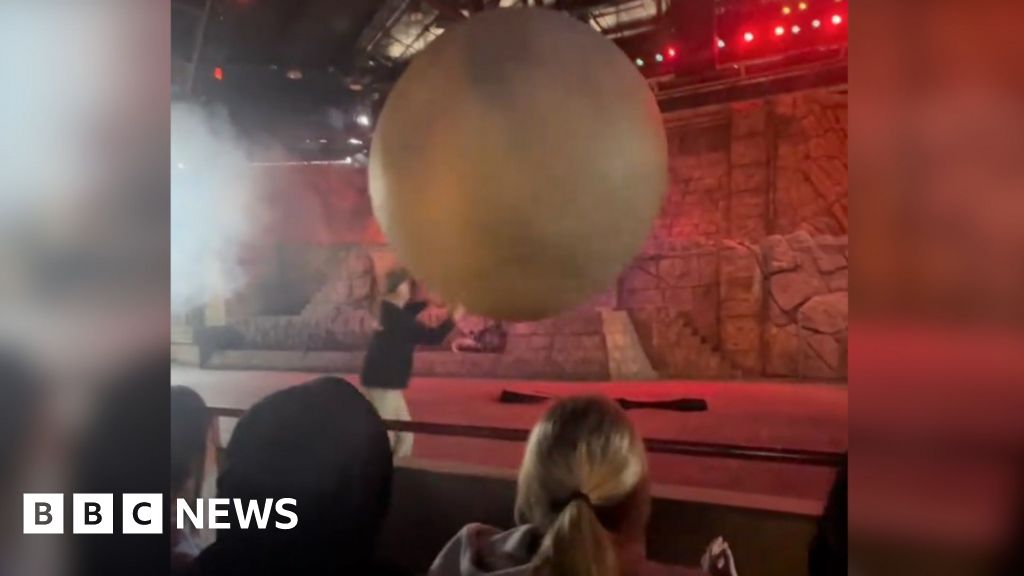
Ah good point, I assumed the rubber deflection would have altered the interaction. But when a larger bolder hits something there has to be some impulse calculation, Like when a bus hits a cyclist, the bus doesn’t stop from firing the cyclist away fast
It’s a partially elastic collision. So basically all the momentum is transferred into the person. Makes the calculation really simple:
V_person = mass_ball / mass_person * V_ball
For the bus and cyclist it would be some small amount of momentum removed from the bus by the cyclist because the bus doesn’t stop. The relative masses are so different, which is why it appears the bus doesn’t slow at all. It does though, but only a tiny bit.