At this rate, finding the last digit is probably just a few years down the road.
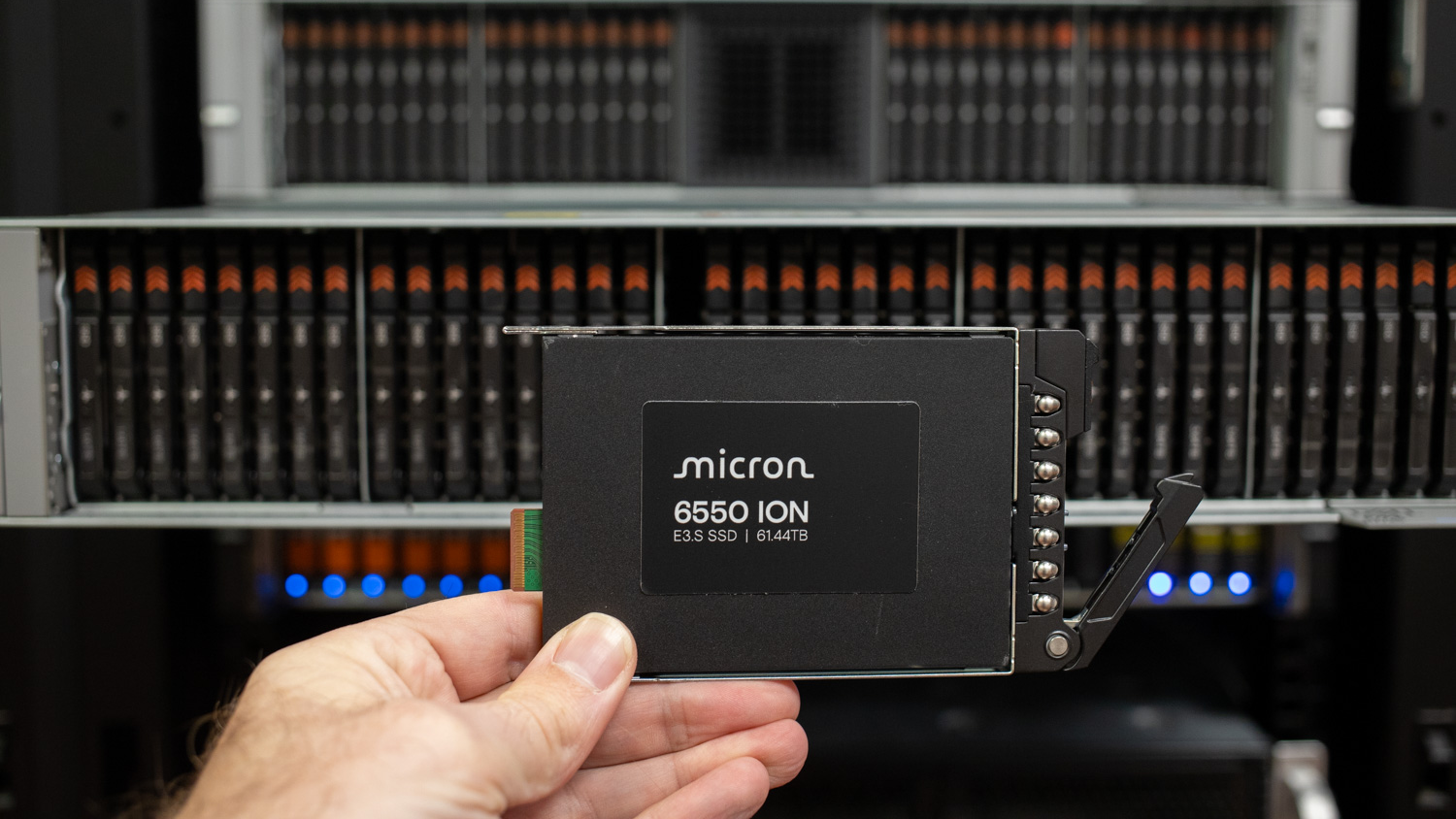
Last but not least, the OS was changed from Windows Server to Ubuntu 24.04.2, a simple switch that resulted in better I/O performance on its own.
Oh boy, here we go.
Of course, find the secret of pi using the Linux version ‘42, answer to everything’.
Ah fedora is on 43 now darn
Why is this even related to IO?
I guess the Windows disk drivers are shit compared to Linux ones.
But what does calculating pi have to do with the disk speed?
I imagine it’s about checkpointing the calculation as it’s very long.
Point is, if the system crashes, you want to be able to resume the calculation without losing too much progress, so you want to periodically write progress to disk.
That takes some CPU cycles away from the calculation, and if your disk driver is inefficient, it will take away more.
AHH ok yeah that does make some sense.
It’s a bottleneck. If you are calculating faster than you can record the results, you have to wait for the write operation to complete before you can do the next calculation.
They don’t have 100TB of ram to store all the digits, I guess
At this rate, finding the last digit is probably just a few years down the road.
At least 3.14 years.
That’s approximately 314 trillion more digits than is necessary to calculate the circumference of the observable universe to within a Planck length.
(The actual number is 62.)
Last but not least, the OS was changed from Windows Server to Ubuntu 24.04.2, a simple switch that resulted in better I/O performance on its own.
Finally, we can get some precision and accuracy when using pi in calculations.
So it is expected to be a last digit?
And what can be done with this knowledge?
Pi is transcendental. There is no last number.
How zen.
I think there’s proofs to show that won’t happen. Don’t ask me to find them or explain them, it’s beyond my scope.
What I’m waiting for is them finding a repeating sequence of 1s and 0s that when arranged in a matrix form a crude circle. A message to those who can learn to find it, with more to follow.
Can’t be repeating, but there could be some sort of non-repeating pattern as far as we know
Ah, another Contact enjoyer.
Movie was pretty good. Book was excellent.
I mean if pi is infinite, wouldn’t that happen anyway at some point?
I don’t think that’s a given. It’s just like there are different sizes of infinite, and more numbers between 0 and 1 than there are real numbers, or something.
That’s really interesting, and matches my completely groundless intuition. Just because it could happen, even on an infinite scale, doesn’t mean it would. That makes sense to me at least.
Yeah, I mean math and even science aren’t always intuitive, so we have to have rules and theories to go by that demonstrate repeatability. Subatomic physics doesn’t even really work like our models say, it’s just that the models give the best results in predicting what we’ll find.
Another example is randomness. Not all random numbers are the same, it depends on how you derive them as to what you’ll get. I guess in some way that’s related to what numbers will pop up for an irrational number. It’s said with enough monkeys randomly typing on typewriters eventually you’ll get a Shakespeare work. It already happened a number of times… since we’re in sense monkeys and got a number of Shakespeare works. Didn’t even need typewriters.
So it basically still boils down to a question of determinism vs, well, not free will but, I guess “indeterminism” would be a word for it. Semantics kind of break down at explaining the nature of existence at some point. I wonder if that is true for mathematics as well.
It’s like that quote of Alfred Korzybski’s, “the map is not the terrain”. The explanation is not reality, it must by necessity be something less, or something different from it.
Pi by definition has no last digit, if it had one it would be possible to square the circle (even if it wouud require an absurd amount of precision)