

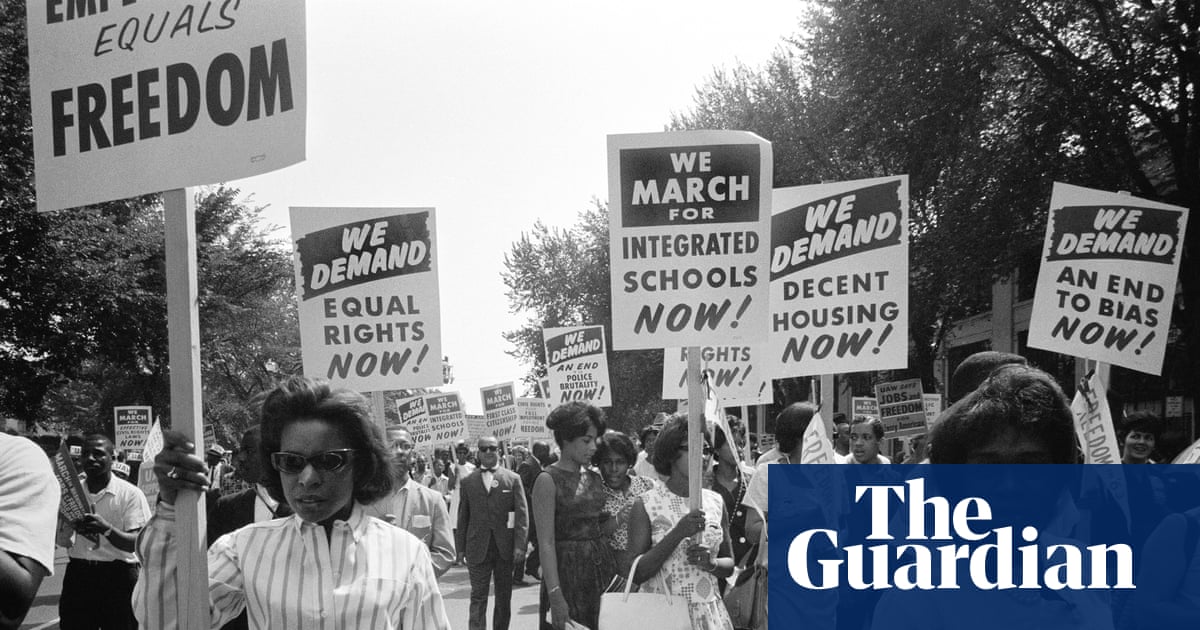
According to the often-cited 3.5% rule, if 3.5% of a population protests against a regime, the regime will fail. Developed by political scientists Erica Chenoweth and Maria Stephan, who researched civil resistance campaigns from 1900 to 2006, the rule has seen renewed interest in leftist circles recently, especially with No Kings protests attracting historic numbers.
…
This shows the outsize impact a single protester can have, the study’s authors say. That’s because having one more attender at a demonstration rallies more support for a political cause than acquiring one more vote during an election does.
…
In the context of civil rights, the movement’s ability to elicit violence from its opponents – such as in 1965, when armed police violently attacked peaceful protesters crossing the Edmund Pettus Bridge in Selma, Alabama – only strengthened public support for the cause. “When the state is perceived as engaging in excess use of force, that tends to generate very sympathetic coverage, and that drives concern,” explained Wasow.
people don’t understand that part of a successful movement is accumulating enough critical mass to make your actions more direct. the first step, really, is convincing people they’re not alone in seeing the problem. you do that by getting in the street and saying as loud as you can that there’s a problem. that’s why fascists always crack down on public displays of dissent. it breaks their narrative that they are in full control and that if you see a problem, the problem is with you.
while you are there, you will be surrounded by other people who, like you, see the problem. exchange contact info. these are your new cooperative as you face off against the problem. talk to each other. what groups are you part of, what recruitment opportunities do you have outside of protest, what things do your groups need more of? this will become the backbone of mutual aid as your groups coordinate to assist each other in meeting the problem.
from here your movement will become more dynamic and more equipped to meet the problems, and the authorities you face will have less control over you. eventually, you will have stripped enough power from the authority that you and your coalition will be able to fight back more and more directly against the authority as it directs more and more powerful assaults against your solidarity.
the greatest power you have though is faith. not faith in others, not faith in god, not even faith in any kind of higher power, just faith in that better things are possible. we know that they are because we study history. a consistent theme of pre-colonial societies is that they viewed themselves as post-hierarchy (not universally, obviously). further, we are currently turning to fascism, and fascism has never survived long because it’s a really stupid way to run things. so we know that better things are possible even if all the faith we can muster for that is remembering when things were better than they are now.
but that last statement is the killer. we will have to coalition build and work with people who think returning to how things were before fascism will be good enough. it won’t be. liberalism consistently leads to fascism. the better way forward is not to return to the way things were, but to push for systems that protect us from fascism. of particular interest to me right now are pre-colonial histories of the Nez-Perce, Taino, and Hawai’ians