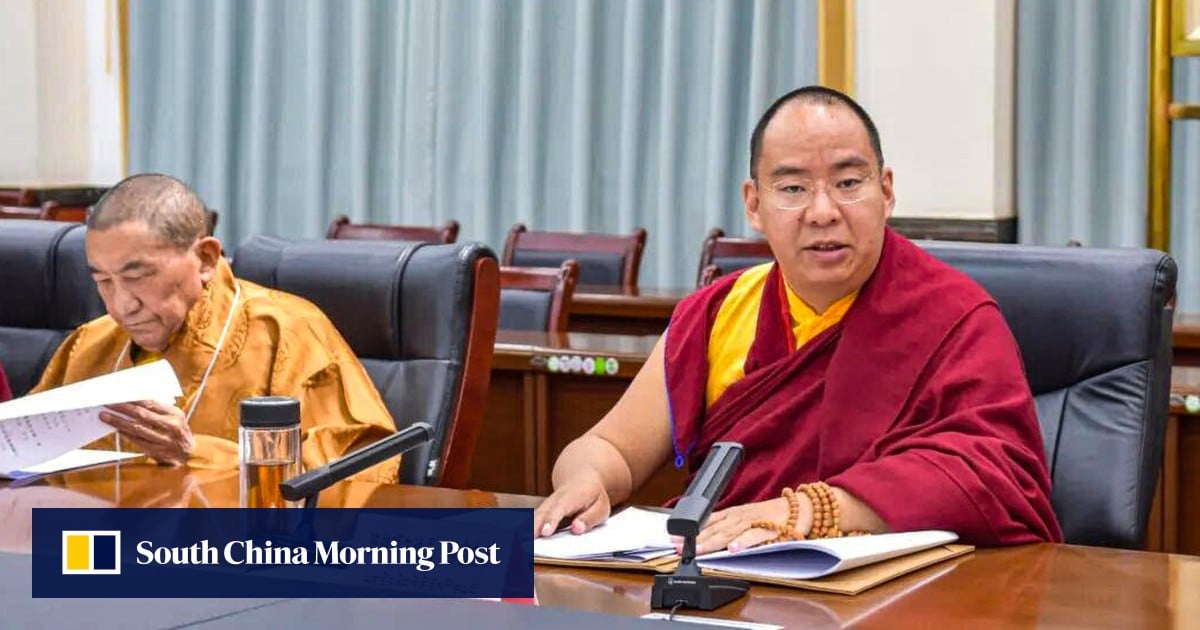
This apparently isn’t even the “real” Panchen Lama, but is the one chosen by China to replace the one that was kidnapped and was chosen by the Dalai Lama.
This apparently isn’t even the “real” Panchen Lama
Sort of the joke of religious doctrine. These people aren’t actually reincarnated Buddhist Wizards who can magically divine the destiny of their successors.
These are humans, they can be educated and influenced as easily as anyone, and their politics/religion is a consequence of their upbringing rather than some magical pre-birth spiritual intuition. And they can also grow up, realize their position in the world, and regret their decisions in hindsight.
Gyalo Thondup, the Dalai Lama’s elder brother, also expressed frustration with the role of the CIA in Tibetan affairs. In a 2009 interview, he stated “I never asked for CIA military assistance. I asked for political help. I wanted to publicize the Tibet situation, to make a little noise. The Americans promised to help make Tibet an independent country. All those promises were broken.” He continues, claiming that America “didn’t want to help Tibet. It just wanted to make trouble for China. It had no far-sighted policy for Tibet. I wasn’t trained for this (clandestine operations). We didn’t know about power politics.”
During the Tibetan program’s period of activity, some of its largest contributions to the CIA’s interests in the region came in the form of keeping the Chinese occupied with resistance, never actually producing a mass uprising establishing independence for Tibet from Beijing. The program also produced a trove of army documents that Tibetan insurgents seized from the Chinese and turned over to the CIA in 1961 in what has been referred to as “one of the greatest intelligence successes of the Cold War”.
I don’t follow religious doctrine either, but as long as the adherents aren’t acting in ways that are harmful to others, I personally try not to insult or belittle them or their beliefs.
The information regarding the CIA is interesting though. The fact that the US reneged on their promises and only used Tibet to extract information about China is depressing, but not surprising.
Perhaps, but some of the greatest inventions and discoveries were made by people who followed magical thinking.
Religion has unquestionably caused untold suffering, but that’s not the only outcome of religion. There has also been untold suffering that had nothing to do with religion.
It’s also wrong to act like the actions of Myanmar or any perpetrator of genocide are representative of a religious monolith. Do you think it would be beneficial to insult and vilify Buddhists, and normalize that behavior because of the actions of Myanmar?
Insulting and vilifying adherents of a religion, and treating them like a monolith are exactly what leads to religious persecution, and in some cases genocide.
On a more basic level, it’s just needlessly hostile. Life is difficult enough on its own, why spend time and energy insulting others based on something that overwhelmingly does not affect you or your community?
Exactly, genocides happen and no religion is good at preventing them. All religions are equally useless as sources of truth and morality. We should neither vilify or praise anyone for being religious or adhere to one religion of the other.
Exactly, genocides happen and no religion is good at preventing them. All religions are equally useless as sources of truth and morality.
Religion also isn’t a prerequisite for genocide. Whether or not all religions are equally useless for truth and morality is a big and absolute statement. I can’t say that I agree or disagree because I’m not familiar with every religion.
We should neither vilify or praise anyone for being religious
Whether or not all religions are equally useless for truth and morality is a big and absolute statement. I can’t say that I agree or disagree because I’m not familiar with every religion.
I don’t think you have to know all religions to be able to say that. You just need to know what religion is and how it works. Religion can’t be the source of truth because it’s based on faith, not truth. If you look for truth without any dogma restricting your research you’re a scientists, not a theologian. Religion can’t be the source or morality because it’s goal is to enrich and empower the people that control it, not to teach anything useful. If you teach about morality without demanding obedience and money from your followers you’re a philosopher, not a religious leader.
as the adherents aren’t acting in ways that are harmful to others
The Buddhist successors to the Mongolian/Qing Dynasty were plenty harmful to others. That’s what sparked the student revolts responsible for their leadership’s removal.
You can blame the icky yicky communists for polarizing and galvanizing upwardly mobile tibetan youth into an insurgency. But falling back on CIA agitprop to justify what was effectively a US military operation intended to destabilize a border region isn’t proof of your humanitarianism. Even the Dalai Lama himself regrets letting the CIA militarize Tibet.
The fact that the US reneged on their promises and only used Tibet to extract information about China is depressing, but not surprising.
It’s the story of the Cold War told over and over again. The goal of these operations is to spark civil war, not to liberate or liberalize any population.
The Buddhist successors to the Mongolian/Qing Dynasty were plenty harmful to others. That’s what sparked the student revolts responsible for their leadership’s removal.
It’s my understanding that those harms were political and not religious in nature.
You can blame the icky yicky communists
Why the disparaging adjectives? I feel like I’m missing the point.
falling back on CIA agitprop to justify what was effectively a US military operation intended to destabilize a border region isn’t proof of your humanitarianism. Even the Dalai Lama himself regrets letting the CIA militarize Tibet.
I don’t think there is any justification. It was selfish and self serving from the beginning. If the CIA had followed through on their promises, that would be a different story. But they clearly never intended to do so.
It’s the story of the Cold War told over and over again. The goal of these operations is to spark civil war, not to liberate or liberalize any population.
Look no matter how you feel about the China and i dislike their government as well the “kidnapped” person was according to them relocated and allowed to live a regular life and there is something to be said to not allow a six year old to be forced to a religious figure forced to abide by among other things vows of celibacy.
Forcibly relocating a child away from their parents is the literal definition of kidnapping. Whether or not he ended up having a good life afterwards does not change that fact.
If the parents were about to force their child into a lifetime of religious obligation then fuck em, if not then they’re probably happy about that anyway
Thank you for the clarification, I see that now. What I also see from further research is that he and his family were taken by force and have not been seen publicly since. Whether or not that would be technically considered kidnapping or abduction feels like splitting hairs.
I never said it wasn’t kidnapping or wasn’t wrong i just think there is nuance if he is really living as an ordinary citizen because i don’t support forcing a six year old to become a religious figure, disallowed friends or any semblance of a normal childhood and forced to take lifelong vows of poverty and chastity which is what the Pachen Lama would do even if they gain political and religious power by doing so despite supporting religious freedom i don’t think allowing that is part of it when it involves a child.
Sure, that’s a reasonable opinion, but that also clearly wasn’t the purpose behind his abduction. Without any evidence, it’s impossible to say whether or not he is actually living, as an ordinary citizen or otherwise. I’m not trying to say that there isn’t any nuance in the situation, but without knowing with certainty his ultimate fate and also living in his shoes, it’s impossible to say which path would be preferable.
In your first reply, you put kidnapping in quotes and made it sound exclusively beneficial. Then in your follow up, you undercut my definition of kidnapping (and to be clear, you were technically correct). I interpreted all of that as a refutation of the idea that he was kidnapped. I apologize if I misunderstood at any point.
Both sides are allowed to suck, here. I get what you’re saying- everyone seems to have made decisions without allowing the child, who would be incapable of making such life altering decisions, to have any kind of agency. Being concerned for his welfare is empathetic.
The other posters are concerned that the CCP has a terrible human rights record, and are notorious for being untruthful. Out of the frying pan, into the fire.
No matter how silly you think someone else’s religion is, you don’t get to dictate what others believe or how they get to believe. China has effectively made a religion functionally extinct with their actions. No matter how you slice it, it’s a loss for humanity.
Did i say any of that I’m far from a china fan but respecting someone’s religion is different than supporting a six year old being turned into a religious figure disallowed a childhood and forced to take lifelong vows of poverty and chastity which is what the Pachen Lama is forced to do.
Dunno dude. Six year olds should be chaste. When he’s older he can go and have sex if he doesn’t believe in his religion. Or at least he could have if he wasn’t disappeared as part of a genocide land grab


Archive link.
This apparently isn’t even the “real” Panchen Lama, but is the one chosen by China to replace the one that was kidnapped and was chosen by the Dalai Lama.
Sort of the joke of religious doctrine. These people aren’t actually reincarnated Buddhist Wizards who can magically divine the destiny of their successors.
This Panchen Lama is as much “real” as the current Dalai Lama is “real”.
These are humans, they can be educated and influenced as easily as anyone, and their politics/religion is a consequence of their upbringing rather than some magical pre-birth spiritual intuition. And they can also grow up, realize their position in the world, and regret their decisions in hindsight.
I don’t follow religious doctrine either, but as long as the adherents aren’t acting in ways that are harmful to others, I personally try not to insult or belittle them or their beliefs.
The information regarding the CIA is interesting though. The fact that the US reneged on their promises and only used Tibet to extract information about China is depressing, but not surprising.
Magical thinking, in and of itself, is harmful to all of society.
Perhaps, but some of the greatest inventions and discoveries were made by people who followed magical thinking.
Religion has unquestionably caused untold suffering, but that’s not the only outcome of religion. There has also been untold suffering that had nothing to do with religion.
https://en.wikipedia.org/wiki/Rohingya_genocide
Genocide is never justified.
It’s also wrong to act like the actions of Myanmar or any perpetrator of genocide are representative of a religious monolith. Do you think it would be beneficial to insult and vilify Buddhists, and normalize that behavior because of the actions of Myanmar?
Insulting and vilifying adherents of a religion, and treating them like a monolith are exactly what leads to religious persecution, and in some cases genocide.
On a more basic level, it’s just needlessly hostile. Life is difficult enough on its own, why spend time and energy insulting others based on something that overwhelmingly does not affect you or your community?
Exactly, genocides happen and no religion is good at preventing them. All religions are equally useless as sources of truth and morality. We should neither vilify or praise anyone for being religious or adhere to one religion of the other.
Religion also isn’t a prerequisite for genocide. Whether or not all religions are equally useless for truth and morality is a big and absolute statement. I can’t say that I agree or disagree because I’m not familiar with every religion.
This I agree with 100%.
I don’t think you have to know all religions to be able to say that. You just need to know what religion is and how it works. Religion can’t be the source of truth because it’s based on faith, not truth. If you look for truth without any dogma restricting your research you’re a scientists, not a theologian. Religion can’t be the source or morality because it’s goal is to enrich and empower the people that control it, not to teach anything useful. If you teach about morality without demanding obedience and money from your followers you’re a philosopher, not a religious leader.
I don’t recall Tibetan Buddhists being involved in that.
The Buddhist successors to the Mongolian/Qing Dynasty were plenty harmful to others. That’s what sparked the student revolts responsible for their leadership’s removal.
You can blame the icky yicky communists for polarizing and galvanizing upwardly mobile tibetan youth into an insurgency. But falling back on CIA agitprop to justify what was effectively a US military operation intended to destabilize a border region isn’t proof of your humanitarianism. Even the Dalai Lama himself regrets letting the CIA militarize Tibet.
It’s the story of the Cold War told over and over again. The goal of these operations is to spark civil war, not to liberate or liberalize any population.
It’s my understanding that those harms were political and not religious in nature.
Why the disparaging adjectives? I feel like I’m missing the point.
I don’t think there is any justification. It was selfish and self serving from the beginning. If the CIA had followed through on their promises, that would be a different story. But they clearly never intended to do so.
Amen.
Look no matter how you feel about the China and i dislike their government as well the “kidnapped” person was according to them relocated and allowed to live a regular life and there is something to be said to not allow a six year old to be forced to a religious figure forced to abide by among other things vows of celibacy.
Forcibly relocating a child away from their parents is the literal definition of kidnapping. Whether or not he ended up having a good life afterwards does not change that fact.
If the parents were about to force their child into a lifetime of religious obligation then fuck em, if not then they’re probably happy about that anyway
His parents were relocated with him.
Thank you for the clarification, I see that now. What I also see from further research is that he and his family were taken by force and have not been seen publicly since. Whether or not that would be technically considered kidnapping or abduction feels like splitting hairs.
Talk about splitting heirs
I never said it wasn’t kidnapping or wasn’t wrong i just think there is nuance if he is really living as an ordinary citizen because i don’t support forcing a six year old to become a religious figure, disallowed friends or any semblance of a normal childhood and forced to take lifelong vows of poverty and chastity which is what the Pachen Lama would do even if they gain political and religious power by doing so despite supporting religious freedom i don’t think allowing that is part of it when it involves a child.
Sure, that’s a reasonable opinion, but that also clearly wasn’t the purpose behind his abduction. Without any evidence, it’s impossible to say whether or not he is actually living, as an ordinary citizen or otherwise. I’m not trying to say that there isn’t any nuance in the situation, but without knowing with certainty his ultimate fate and also living in his shoes, it’s impossible to say which path would be preferable.
In your first reply, you put kidnapping in quotes and made it sound exclusively beneficial. Then in your follow up, you undercut my definition of kidnapping (and to be clear, you were technically correct). I interpreted all of that as a refutation of the idea that he was kidnapped. I apologize if I misunderstood at any point.
There is no proof of life except word from xinnie the poo that the child is alive, they refuse to allow any external orgs to verify if it is true.
Both sides are allowed to suck, here. I get what you’re saying- everyone seems to have made decisions without allowing the child, who would be incapable of making such life altering decisions, to have any kind of agency. Being concerned for his welfare is empathetic.
The other posters are concerned that the CCP has a terrible human rights record, and are notorious for being untruthful. Out of the frying pan, into the fire.
No matter how silly you think someone else’s religion is, you don’t get to dictate what others believe or how they get to believe. China has effectively made a religion functionally extinct with their actions. No matter how you slice it, it’s a loss for humanity.
Did i say any of that I’m far from a china fan but respecting someone’s religion is different than supporting a six year old being turned into a religious figure disallowed a childhood and forced to take lifelong vows of poverty and chastity which is what the Pachen Lama is forced to do.
Dunno dude. Six year olds should be chaste. When he’s older he can go and have sex if he doesn’t believe in his religion. Or at least he could have if he wasn’t disappeared as part of a genocide land grab