

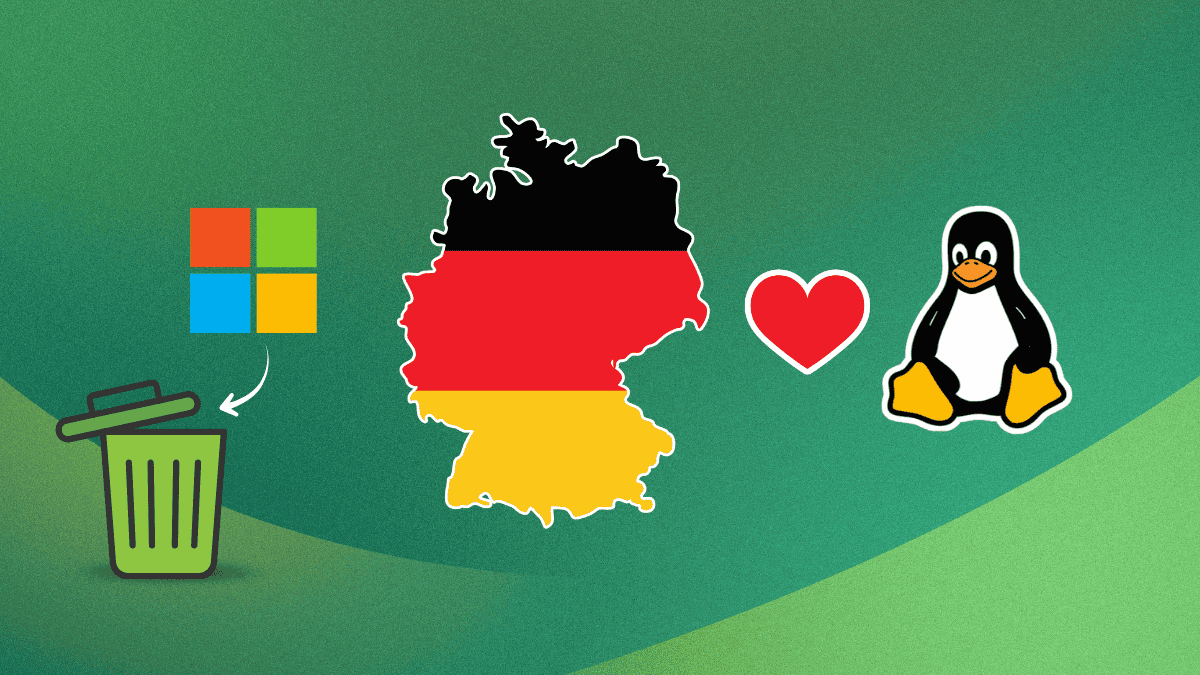
Schleswig-Holstein’s migration to LibreOffice reaches 80% completion, with a one-time €9 million investment on cards for 2026.
Schleswig-Holstein’s migration to LibreOffice reaches 80% completion, with a one-time €9 million investment on cards for 2026.
SUSE, Manjaro, Alpine Linux, CRUX, and NixOS are all technically European (as are many others).
Mint is also european (based on Ireland), even though it’s based on Ubuntu and Debian,
both of which are American (but Debian is FOSS)Edit: Ubuntu is based on London and was founded by South Africans, but has propietary snaps (disabled on Mint). Debian was founded by an American but is FOSS so it operates worldwide.
All FOSS operates worldwide; the point of FOSS is that it provides a paradigm that directly counters the false-scarcity that (often capitalist) systems induce.
(not directed at you, of course)
And Mint has heavily invested in a version that goes to Debian skipping Ubuntu, I think it should have reached stable status by now.
Isn’t Ubuntu South African?
The word yes
The company no, it’s British or something
Guix, btw.
Sure, but I mean a distro developed/maintained/curated officially by the EU or one of its member governments.
I’m all for it, but I am not sure any more wath the political trend on surveillance.
I’m not overly concerned with an organization trying to build surveillance functions into an open source operating system.
Hard pass. I’m not interested in any software curated by a western government.
Or eastern for that matters
ah, well then, RedStar OS is for you!
I’m not sure a government can have the agility necessary for keeping a good track of good decisions over a reasonable amount of time.
I’d bet it would take a planification similar to building a nuclear reactor or an airport: over budget, blown over scheduled time, fulfilling specs on paper but not in spirit, and used only when people have no other option ( goes without saying all governments are a monopoly, you can’t have 2 bodies having powers over a particular geographic place).
On the other hand, a government organization might do a better job of keeping track of development goals over time. It might be slower than independent open source projects, but it would probably also be more stable than most Linux distros. Enterprise-level software has different requirements and different development cycles from consumer-level software. Having a competing option for Red Hat could only be a good thing.
It’s not as if they’d be starting from scratch, it would most likely still be Linux. But they might bring more focus to long-term stability and especially cybersecurity implementations to meet government security requirements.