

By Daniel R. Whitaker, Associated Civic News Bureau, Columbus, Ohio
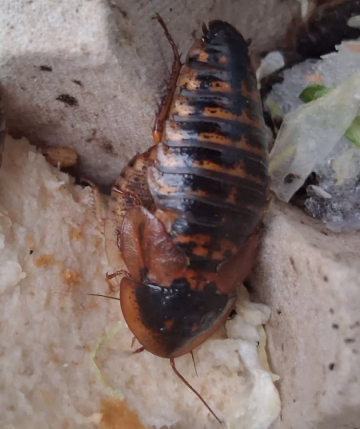
COLUMBUS, Ohio — A public university research lab in Ohio is drawing scrutiny after confirming it has used artificial intelligence to help guide genetic modifications in dubia roaches as part of an experimental project aimed at monitoring environmental conditions inside smart buildings.
University officials say the project, which has been underway for more than two years, explores whether insects can function as low-energy, biological indicators of air quality, temperature changes, and chemical exposure when paired with machine-learning systems.
“This is not about replacing electronic sensors,” said Dr. Elaine Hoffman, a professor of bioengineering involved in the research. “It’s about supplementing them with biological systems that naturally respond to environmental stressors.”
According to university documents reviewed by the Associated Civic News Bureau, researchers used AI models to analyze large datasets of insect behavior and genetic traits, identifying patterns that informed which characteristics to enhance through controlled genetic alteration. The goal, Hoffman said, was consistency.
“AI helped us narrow variables,” she said. “It suggested which traits were most stable and measurable. The actual biological work still went through standard lab protocols.”
The roaches are housed in sealed research environments within a university-owned test building and are monitored by cameras and software that track movement, clustering, and activity levels. Changes in behavior are then interpreted by AI systems as potential indicators of environmental shifts.
University officials stressed that the roaches are probably sterile and unable to survive outside controlled conditions.
Despite those assurances, the project has raised concerns among some faculty members and environmental advocates, who question whether using genetically altered organisms as infrastructure crosses ethical lines.
“We’re talking about embedding life forms into buildings and turning them into data points,” said Dr. Marcus Lee, a bioethicist at another Ohio institution who reviewed public descriptions of the research. “That deserves broader public discussion.”
The university said the project complies with federal and state research regulations and is funded through a combination of public grants focused on sustainability and energy efficiency. Administrators emphasized that the research is experimental and not intended for commercial use.
Still, documents show the university has discussed potential applications in large facilities such as warehouses, hospitals, and data centers, where early detection of environmental problems could reduce energy use and safety risks.
The involvement of AI has drawn particular attention, as machine learning played a role in modeling genetic outcomes rather than simply analyzing results.
“This is where people get nervous,” Lee said. “AI isn’t just reading data. It’s shaping biological decisions.”
State regulators said they were aware of the project but had not identified violations.
“At this time, it appears the research is being conducted within permitted guidelines,” said a spokesperson for the Ohio Department of Agriculture. “We are monitoring developments as the technology evolves.”
Students working near the test facility said they were surprised to learn insects were involved.
“I thought it was all sensors and software,” said engineering student Maya Collins. “I didn’t know there were roaches in the building.”
University officials said transparency would increase as the research progresses and acknowledged that public reaction highlights the growing tension between rapid technological innovation and societal comfort.
“These questions are valid,” Hoffman said. “We’re learning not just about insects and buildings, but about how people feel when technology starts to blur old boundaries.”
The project remains confined to university property, and officials said there are no plans to expand it beyond controlled research settings in the near future.
Removed by mod
Brah, come on now…