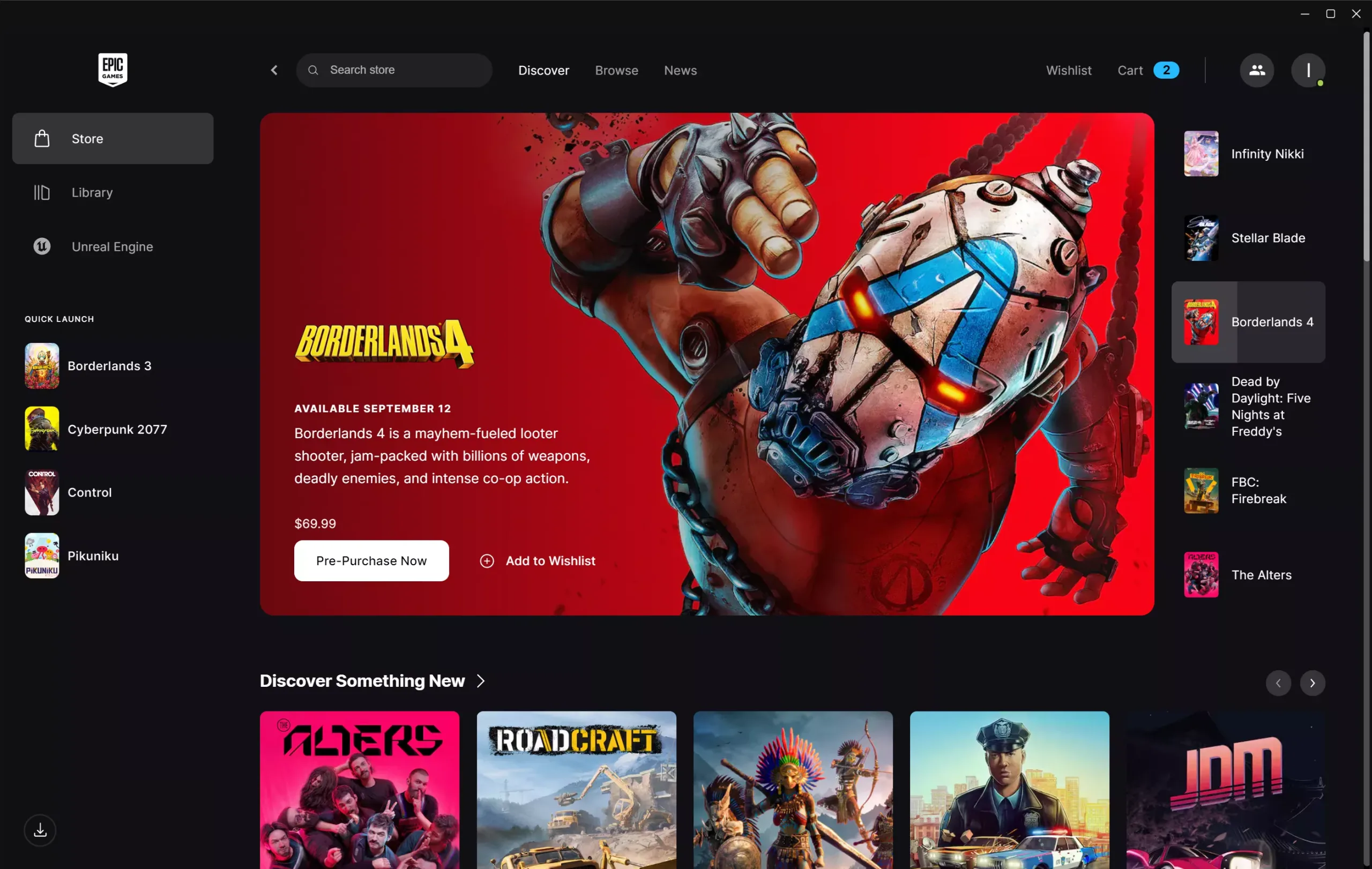
The Epic Games Store has seen a strong increase in user numbers over the past six years, reaching an impressive total of 295 million users. However, third-party revenue has not grown at the same pace.
That certainly changes the calculation quite a bit, but how many people can be anticipated to claim a given free game is definitely going to be a point of negotiation on how much to pay the publisher to giveaway a given game, so in a roundabout way it does ultimately cost Epic more money if you do claim the games without downloading them
I mean defining “active users” is an inherently political choice in any metric. You’re ultimately choosing how to slice the data for analysis, so if you adjust your metrics on customers who only claim free games vs customers who actually spend money on the platform the data can tell completely different stories.
I suppose the point is, collecting the free games probably creates non-negligable costs for Epic, and how that looks on their released metrics is entirely up to how the data gets sliced
It’s a negligible cost. Evidenced by the fact that despite a significant number of “new users” just collecting the free games and not spending any money, EGS continues to give away free games.
Clearly padding the number of users is worth it to them more than the ‘cost’ of those users claiming a free license on their account. Otherwise they would stop doing it.


Epic pays a flat rate to make the game free, not per download.
That certainly changes the calculation quite a bit, but how many people can be anticipated to claim a given free game is definitely going to be a point of negotiation on how much to pay the publisher to giveaway a given game, so in a roundabout way it does ultimately cost Epic more money if you do claim the games without downloading them
You’re still being an “active user” that they can use to pad their numbers and entice investors.
If you want to hurt Epic the best way to do it is to not log into their system at all.
I mean defining “active users” is an inherently political choice in any metric. You’re ultimately choosing how to slice the data for analysis, so if you adjust your metrics on customers who only claim free games vs customers who actually spend money on the platform the data can tell completely different stories.
I suppose the point is, collecting the free games probably creates non-negligable costs for Epic, and how that looks on their released metrics is entirely up to how the data gets sliced
It’s a negligible cost. Evidenced by the fact that despite a significant number of “new users” just collecting the free games and not spending any money, EGS continues to give away free games.
Clearly padding the number of users is worth it to them more than the ‘cost’ of those users claiming a free license on their account. Otherwise they would stop doing it.