

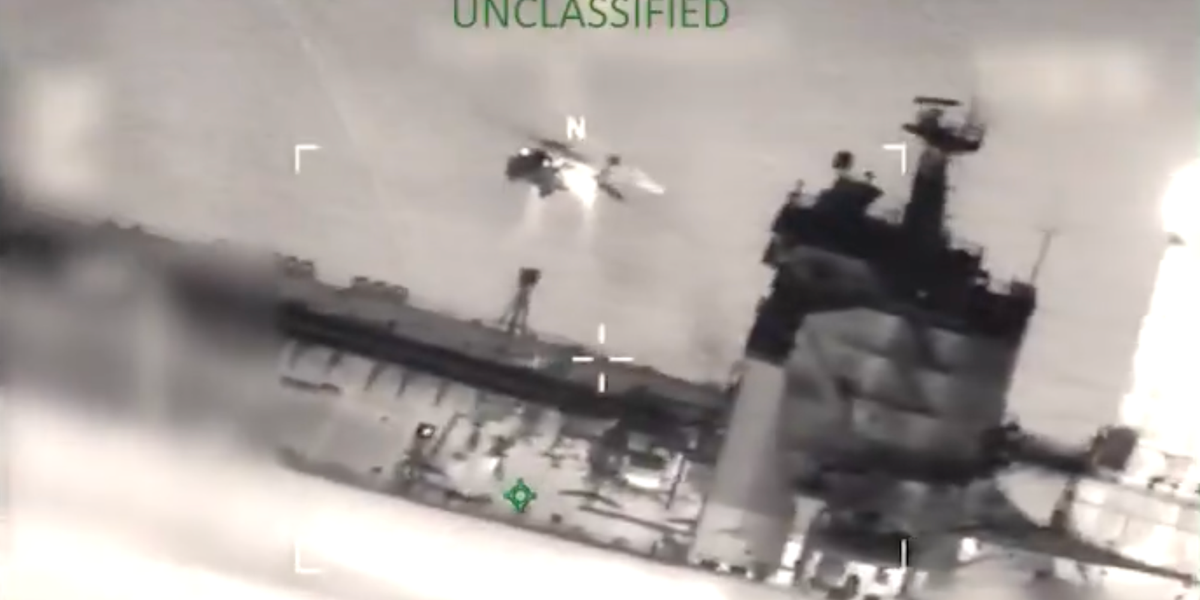
- cross-posted to:
- [email protected]
“No state has the right to use force against vessels duly registered under the jurisdiction of other states,” said the Russian Transport Ministry
Archived version: https://archive.is/newest/https://www.commondreams.org/news/russia-venezuela-oil-tanker
Disclaimer: The article linked is from a single source with a single perspective. Make sure to cross-check information against multiple sources to get a comprehensive view on the situation.
https://www.cnn.com/2026/01/08/us/russia-oil-tanker-seizure-what-we-know-intl-hnk
My bad, I read that US considered it stateless. But in this case it was still illegal action on the US part, since then only Guyana had jurisdiction.
So they cancelled their voyage?
The truth is most likely that the ship is part of the Russian shadow fleet. It may have been pretending to be registered in Guyana, then changed to Russia when they were caught out.
To my mind, the question is “does an enforcement gap exist in maritime law regarding these ships, and should the US be filling that gap?”
Caught? They weren’t doing anything illegal. US has no jurisdiction to enforce their sactions against sovereign countries and ships in the international waters. Just because US has a god complex doesn’t mean they are above the law.
The law is the law and US had broken it. Could it be updated? Sure. Should US be able to subvert the law? Fuck no.
Most ships operating from their countries don’t even use their own flags. There are even landlocked countries that have registered ships (e.g. Moldova).
https://statbase.org/datasets/air-rail-and-water-transportation/number-of-ships-by-flag-of-registration/
Operating the vessel under a false flag is illegal, making the ship count as stateless and able to be boarded by anyone. The US allegation is that the Guyana flag was a false flag and the transfer of registration to Russia was illegal/null, therefore the ship can be boarded without permission in international waters.
Regardless of this case, there is the larger trend of these “shadow fleets” operating outside of international laws under the direction of their true home countries. They use international waters as a safe zone to avoid enforcement, along with tricks like flag-hopping, deactivating or spoofing their transponders, and moving cargo ship-to-ship in international waters to avoid entering a national territory. These shadow fleets are also implicated in deliberately damaging underwater cables, and in China’s case are used for illegal fishing which damages fisheries across the globe.
What I’m saying is that if the country of registry fails to enforce maritime law on the ships under their flag, or if they in fact encourage/direct the vessels to break these laws, then there are gaps in maritime law and enforcement of it. Nowhere did I say that the US is justified in breaking laws to enforce other laws, but I think it’s understandable why vigilante justice gains the support that it does.
Well, US lied. It is a legally registered vessel and was using matching flag.
IMO / MMSI: 9230880 / 750350205
https://www.vesselfinder.com/vessels/details/9230880