Its a gyroscope - the forces so long as its running are rather powerful.
A “gust of wind” would have to be powerful enough to overcome those forces. I’m just guessing, but I suspect we’re talking hurricane speeds.
Jet engines routinely rotate at many thousands of rpm, and basic force calculations show that speed/velocity are the single greatest energy/force metric as it’s influence is a squaring function - V is always represented as V^2 in these formulas.
Its why safety commercials for driving always say “Speed Kills” - mass doesn’t change and yet total energy in the system doubles with each single-unit increase in speed.
My point is that there’s a helluva lot of gyroscopic stability so long as that engine is spinning. I’d be more concerned about loss of that stability and lift than an outside force pushing it around.


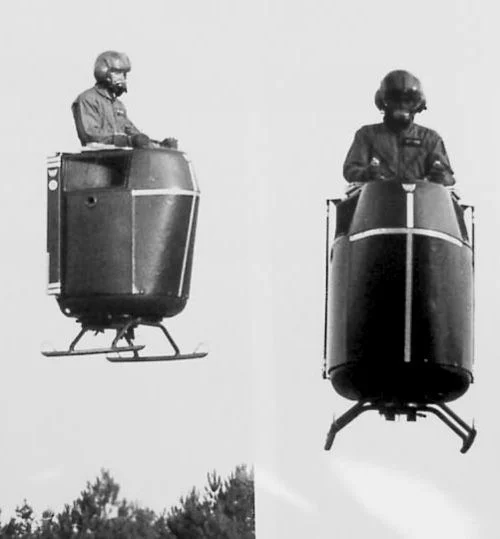
Its a gyroscope - the forces so long as its running are rather powerful.
A “gust of wind” would have to be powerful enough to overcome those forces. I’m just guessing, but I suspect we’re talking hurricane speeds.
Jet engines routinely rotate at many thousands of rpm, and basic force calculations show that speed/velocity are the single greatest energy/force metric as it’s influence is a squaring function - V is always represented as V^2 in these formulas.
Its why safety commercials for driving always say “Speed Kills” - mass doesn’t change and yet total energy in the system doubles with each single-unit increase in speed.
My point is that there’s a helluva lot of gyroscopic stability so long as that engine is spinning. I’d be more concerned about loss of that stability and lift than an outside force pushing it around.