Idk, maybe I’m a big idiot, but I have issues with the points made in this article. I will concede the point that individual Chatgpt use is not that big of a deal, environmentally speaking. If I can trust the numbers in this article, then it has successfully convinced me that I dont need to worry about the energy cost or emissions or water use of individual prompts.
The case I take issue with is the author’s point that LLMs are inherently useful. I don’t care if chatgpt is kind of just a better Google. I still hate every other thing about it. Using Chatgpt is clearly developing psychoses in some people, and even for people like this author that can use it responsibly, I think it’s just intellectually lazy. It encourages the user to abandon critical thinking and let the robot do it for you. What’s more, as a search tool, it’s destroying the internet. If no one ever goes to websites to read the info, why would people keep making websites with reliable information? Why should I even read this article? Why don’t I just have chat summarize it for me, and I never give this author any traffic or money? Then of course there is the plagiarism problem…
So idk. Maybe now I’ll stop harping on the environmental point. But I’m still going to avoid LLMs like the plague, because at their core I think they rob us of some of the finer points of a life well-lived. I’d rather spend my time poring through articles to understand the why and how of a question, rather than have a robot just spit the “what” out at me.
In an ideal world, we’d work together as a species to distill our collective knowledge into a reliable source of truth, much like the promise of Wikipedia. We’d use this new technology to make that accessible to everyone, even if they lack context to understand some of the deeper subjects. It would be a rising tide that lifted everyone. It doesn’t have to be controlled by tech bros, and IMO the lack of a popular utopian vision coming from leftist ideals has left a hole eagerly taken over by people trying to make a buck. Projects like AI Horde are much better than saying “AI bad, end of story” IMO.
It’s hard for me to really gauge the laziness aspect. Yeah, it encourages laziness in some ways, but it doesn’t have to be on the things that matter. If it takes care of grunt work like “generate a react app skeleton that does X”, that could be viewed as laziness, but it could also be viewed as the invention of the tractor eliminating a lot of unnecessary farm work or something. In other words, if you just want to “do the thing”, and it helps you get to that goal faster, is that lazy?
Regarding your edit, makes sense to take it with a grain of salt, but broken clocks and all that. The numbers are more important, and they seem reasonable. Taking a look at this article (written before the current crop of LLMs took off, but also just a random link I found so take it also with a grain of salt), we see a huge increase in data center workloads before any current AI workloads:
I think the article’s general point is likely valid, and that it’s a valid criticism to say “If you criticize AI for energy usage but not video streaming then you’re unfairly targeting AI”.


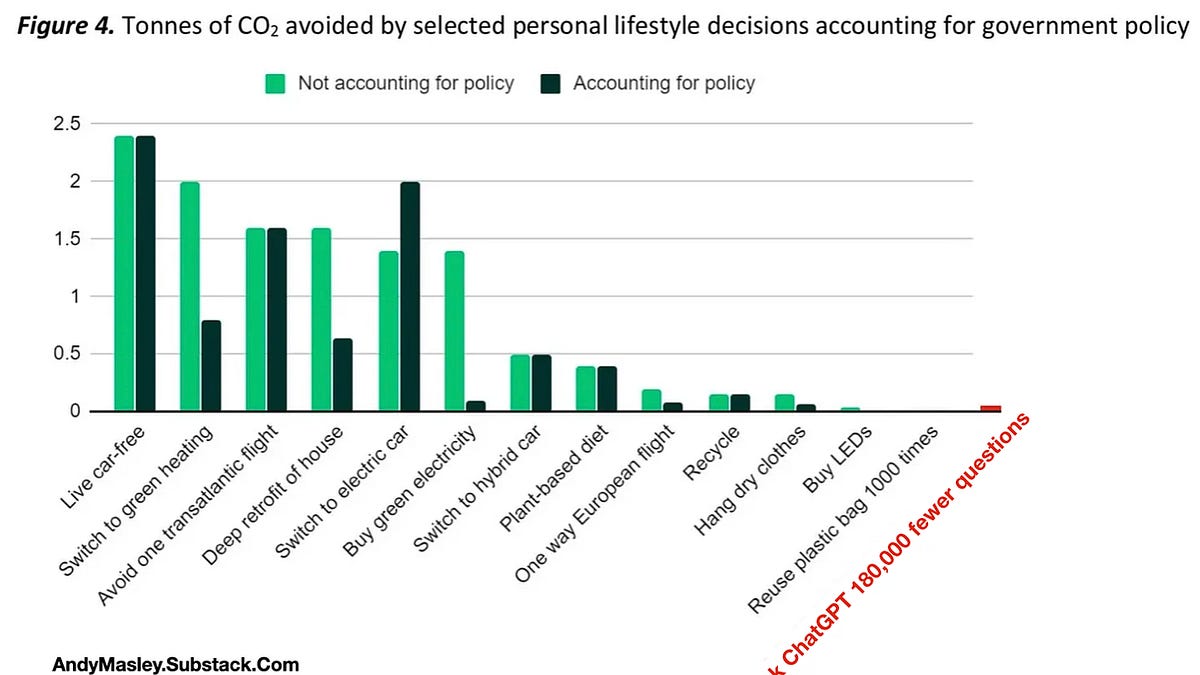
Idk, maybe I’m a big idiot, but I have issues with the points made in this article. I will concede the point that individual Chatgpt use is not that big of a deal, environmentally speaking. If I can trust the numbers in this article, then it has successfully convinced me that I dont need to worry about the energy cost or emissions or water use of individual prompts.
The case I take issue with is the author’s point that LLMs are inherently useful. I don’t care if chatgpt is kind of just a better Google. I still hate every other thing about it. Using Chatgpt is clearly developing psychoses in some people, and even for people like this author that can use it responsibly, I think it’s just intellectually lazy. It encourages the user to abandon critical thinking and let the robot do it for you. What’s more, as a search tool, it’s destroying the internet. If no one ever goes to websites to read the info, why would people keep making websites with reliable information? Why should I even read this article? Why don’t I just have chat summarize it for me, and I never give this author any traffic or money? Then of course there is the plagiarism problem…
So idk. Maybe now I’ll stop harping on the environmental point. But I’m still going to avoid LLMs like the plague, because at their core I think they rob us of some of the finer points of a life well-lived. I’d rather spend my time poring through articles to understand the why and how of a question, rather than have a robot just spit the “what” out at me.
In an ideal world, we’d work together as a species to distill our collective knowledge into a reliable source of truth, much like the promise of Wikipedia. We’d use this new technology to make that accessible to everyone, even if they lack context to understand some of the deeper subjects. It would be a rising tide that lifted everyone. It doesn’t have to be controlled by tech bros, and IMO the lack of a popular utopian vision coming from leftist ideals has left a hole eagerly taken over by people trying to make a buck. Projects like AI Horde are much better than saying “AI bad, end of story” IMO.
It’s hard for me to really gauge the laziness aspect. Yeah, it encourages laziness in some ways, but it doesn’t have to be on the things that matter. If it takes care of grunt work like “generate a react app skeleton that does X”, that could be viewed as laziness, but it could also be viewed as the invention of the tractor eliminating a lot of unnecessary farm work or something. In other words, if you just want to “do the thing”, and it helps you get to that goal faster, is that lazy?
Regarding your edit, makes sense to take it with a grain of salt, but broken clocks and all that. The numbers are more important, and they seem reasonable. Taking a look at this article (written before the current crop of LLMs took off, but also just a random link I found so take it also with a grain of salt), we see a huge increase in data center workloads before any current AI workloads:
I think the article’s general point is likely valid, and that it’s a valid criticism to say “If you criticize AI for energy usage but not video streaming then you’re unfairly targeting AI”.