Russia plans to put a nuclear power plant on the moon in the next decade to supply its lunar space programme and a joint Russian-Chinese research station, as major powers rush to explore the earth's only natural satellite.
I was thinking solar + battery energy storage for when the sun is ‘unavailable’. It’s not like having like 1k MW capacity and nothing to power makes any sense, but an area with panels and storage can definitely get things started, at least…
For sure, and that can definitely work. But, you will need three times the number of solar panels (since half the time the panels are doing nothing and if you’re storing a lot of energy, that means there’s a proportional amount of storage losses.)
And I honestly don’t know how much mass in batteries would be needed for 15 days worth of storage, but my instincts say too much.
Keep in mind that total mass to deliver can sometimes be the biggest cost limitation. A nuclear generator that gets delivered in one launch could be cheaper than otherwise much simpler solar panels and batteries if that solution requires two or three launches.
Well the sun works great for orbit around the moon, but on the surface a day/night cycle lasts a month. So that’s about 15 days of night at a time.
That’s why everyone continues to talk about the lunar poles, btw, because you have an eternal twilight there, where continuous solar power might still be doable.
Yeah, theoretically if your positioning is perfect you can get that eternal twilight, where the sun just travels across the horizon in a circle. But you know the moon wobbles a bit, so while you might get a month or two of straight sun, you might get a month or two of straight darkness, where the sun is just below the horizon, just barely out of reach…
Well, at the poles, in deep craters, the bottom of the crater will never get sun, ever. As a result, these polar craters are very cold. This is pretty special because it means that any water ice that may have fallen from comet impacts or other sources will stay frozen on the surface, never melting.
Water is everything on the moon, it can be used for drinking, and as a source of oxygen for breathing, but probably more importantly, it’s rocket fuel (hydrogen and oxygen). If you can collect ice on the moon you can refuel a rocket there, on a full tank you can easily make orbit given the moon’s low gravity, and still have enough gas in the tank to go literally anywhere in the solar system. The moon becomes a launching point to anywhere.
Now I might be talking shit, but isn’t there a problem with dust on the moon that means solar panels wouldn’t work very well? Though I may be thinking of Mars. Or something else. Uranus?


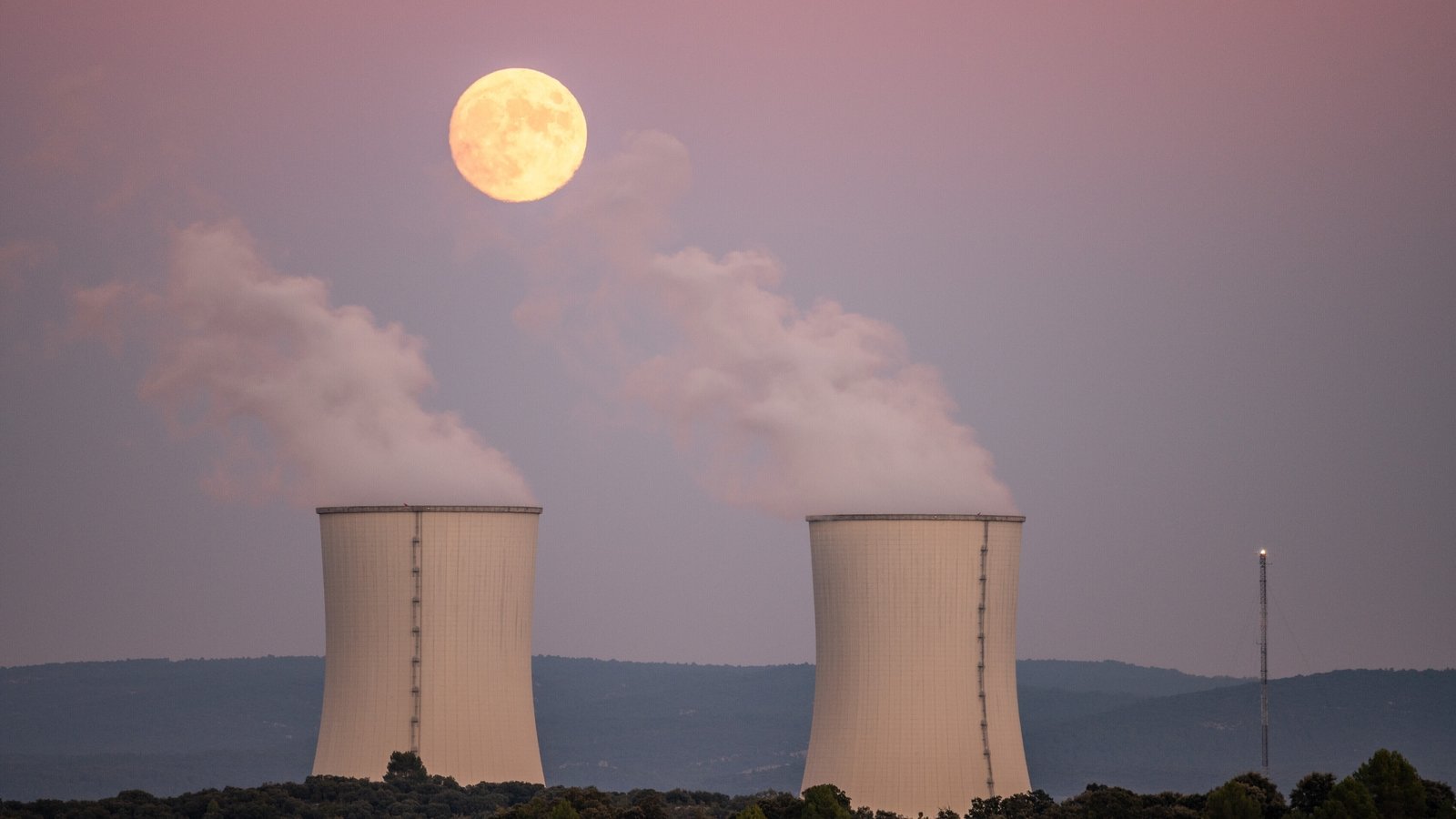
The sun, right over there: “um, hello?”
Well the sun works great for orbit around the moon, but on the surface a day/night cycle lasts a month. So that’s about 15 days of night at a time.
Obviously there’s no wind on the moon and burning things makes no sense. So literally the only options left are nuclear or lots and lots of batteries.
I was thinking solar + battery energy storage for when the sun is ‘unavailable’. It’s not like having like 1k MW capacity and nothing to power makes any sense, but an area with panels and storage can definitely get things started, at least…
For sure, and that can definitely work. But, you will need three times the number of solar panels (since half the time the panels are doing nothing and if you’re storing a lot of energy, that means there’s a proportional amount of storage losses.)
And I honestly don’t know how much mass in batteries would be needed for 15 days worth of storage, but my instincts say too much.
Keep in mind that total mass to deliver can sometimes be the biggest cost limitation. A nuclear generator that gets delivered in one launch could be cheaper than otherwise much simpler solar panels and batteries if that solution requires two or three launches.
That’s why everyone continues to talk about the lunar poles, btw, because you have an eternal twilight there, where continuous solar power might still be doable.
Yeah, theoretically if your positioning is perfect you can get that eternal twilight, where the sun just travels across the horizon in a circle. But you know the moon wobbles a bit, so while you might get a month or two of straight sun, you might get a month or two of straight darkness, where the sun is just below the horizon, just barely out of reach…
yeah you’re right actually, now i’m confused. then why does everybody keep talking about the lunar poles?
Well, at the poles, in deep craters, the bottom of the crater will never get sun, ever. As a result, these polar craters are very cold. This is pretty special because it means that any water ice that may have fallen from comet impacts or other sources will stay frozen on the surface, never melting.
Water is everything on the moon, it can be used for drinking, and as a source of oxygen for breathing, but probably more importantly, it’s rocket fuel (hydrogen and oxygen). If you can collect ice on the moon you can refuel a rocket there, on a full tank you can easily make orbit given the moon’s low gravity, and still have enough gas in the tank to go literally anywhere in the solar system. The moon becomes a launching point to anywhere.
Now I might be talking shit, but isn’t there a problem with dust on the moon that means solar panels wouldn’t work very well? Though I may be thinking of Mars. Or something else. Uranus?
There is no wind in the vacuum of space.
Vacuum… everywhere?
Dyson furiously trying to replicate this phenomenon for their next vacuum
Yeah it was Mars that I was thinking about, not the Moon.
Pro: nothing’s ever gonna kick dust on your panels except space debris or ourselves.
Con: nothing’s ever gonna wipe dust off our panels.
engages windshield wipers