

cross-posted from: https://lemmy.ml/post/40818280
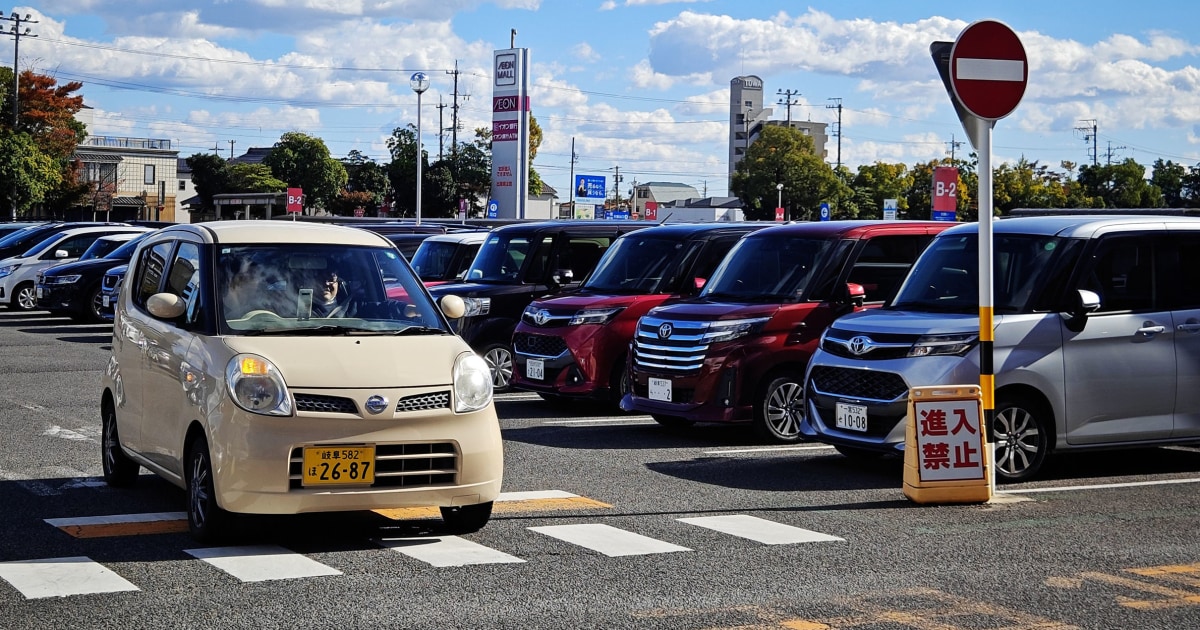
If there’s anything we should take from Japan, it’s treating cars like second class citizens behind transit instead of the other way around. The cute tiny cars are more a side effect of that.
cross-posted from: https://lemmy.ml/post/40818280
If there’s anything we should take from Japan, it’s treating cars like second class citizens behind transit instead of the other way around. The cute tiny cars are more a side effect of that.
In the U.S, there’s at least one challenge to consider, that you could cross many of the world’s countries in the same time you cross some of our states. Tiny cars work really well in Japan because they have a functioning and modern mass transit system, and not a whole ton of landmass that needs to be traversed somewhat quickly by highway alone.
(Yeah. Quite jealous lol)
I imagine their vehicles don’t really need powerful engines either, to reach practical speeds.
It’s almost like we should have “city/town cars” and rarer “highway-only cars” as separate vehicle classes, but. . .that would likely just lead to the necessity of people having both, and we have too many cars as is lol.
China and India both prove your ignorant comment completely wrong.
American exceptionalism at its finest, give us all a break.
Ah yes, India and China, both well known for building massive sprawling suburban developments instead of increasing urban density, horrible mass transit, and big box stores alongside Euclidean Zoning regulations which isolate residential, commercial, and manufacturing into their own zoning types which must be removed from each other.
Give us all a break from your ignorant hate-boner and start hating America for the right reasons: the shitty situation that car companies have put the infrastructure of the entire country into that makes small cars impractical for much of the population and any other options a mere dream.
Where I live, things are spread so far apart that we don’t measure things in terms of distance, we measure them in terms of the time it takes to drive there. It’s not 2 kilometers to the closest grocery store, it’s 10-15 minutes without traffic. It’s not 81 kilometers to the closest city from my suburban town, it’s an hour and a half if you’re lucky and more likely two hours away.
Bro his point absolutely collapses and makes no sense. Every single criticism against America cannot be defended due to the countries size, that makes no sense. Especially when you have countries the same size and larger doing many things (especially transportation) much better and more efficiently. America is falling so far behind the rest of the world it’s a joke.
Read my comment again. The point isn’t just the size of the country - it’s the shitty car-centric design philosophy that goes alongside the size of the country.
From a lack of urban density to a lack of basic public transit options to the fact that local businesses have been destroyed in favor of large shopping centers/companies to zoning regulations favoring separating uses into different locations (like moving groceries and restaurants outside of residential areas and into commercial centers), it all combines to make a singularity of a shitty situation.
Hell, even our city cores are basically desolate and dying because they’re all offices and strangled from any other kind of traffic by highway infrastructure that cuts the city’s central districts off from where people actually live, so the only time businesses see customers is basically from commuters on their way in or out of work and buying lunch.
So it’s not “American exceptionalism” that says that these cars wouldn’t work here because the country is so big, it’s that the shitty urban planning with its focus on cars and low population density has made it incredibly difficult to live without a big car. In most other countries, people often live within 5 minutes of a grocery store because they’re generally inside a residential area. In the US, grocery stores are so out of the way that most people go shopping for groceries in a trip specifically for that purpose once every week or two. It’s just generally impractical to do otherwise unless your commute happens to pass by a grocery store. The closest place to buy groceries for me is 10-15 minutes down the highway, the next closest is 20-30 in the opposite direction, and my only other option is a sandwich shop/deli.
That’s an interesting point to consider, actually.
I was in the frame of mind of comparing the U.S vs. Japan’s situation, since that’s mainly what the article was about.
Do China and India both have a large market for tiny vehicles for interstate travel? Do those have airbags and adequate crumple zones and such? (I think that might’ve been a separate thread) I’d like to see how they handle it.
You didn’t need to be a smug ass about it to a total stranger though. :) The internet isn’t strictly a friend-or-foe dichotomy. Sometimes people are just incorrect. Lol
Anyway, thanks for your insight. Hope you have a good one. <3
Depends on the province and even the city, some highways ban 3wheelers/slower cars, but in general yes, and the random models I just looked up had airbags, idk about crumplezone effectiveness.
4 wheel EVs are more common in China than the classic gas-powered Kei van these days, but you see those around too.
They typically max out at ~100kmh, I dont think they have huge range, but at least 90 minutes on a charge. They’re more spacious on the inside than they look.
Have you heard of the Tuktuk class? That’s the most popular kind of car in India, and it’s much smaller than Kei cars.
Or even, gasp, transit and walkability
Sure would be freaking nice. I very much wish cities were significantly more walkable and compact, and cars were reserved mainly for road trips!
Going anywhere feels like the traffic commute is a big unpleasant chunk of the day.
The US has pretty low speed limits in most areas.
Most Kei Cars can reach 140km/h (87.5mph), which is faster than any speed limit I can find in the US.
If you don’t have to move a massive amount of truck, a small engine can go a long way.
Btw, my first car was a tiny Peugeot 106 with 42 HP. I had no problem getting up to the 130km/h (81.25mph) speed limit on the highways in my country, and the fastest I have ever gone with that car was 160km/h (100mph).
Modern Kei cars have about 50% more power than that Peugeot 106.
Lol, have fun going 87.5 mph in a kei car. Absolute death trap if you get into an accident in one of those shitboxes at that speed.
Compared to US trucks, Kei cars at least have to pass crash tests.