
- cross-posted to:
- [email protected]
- cross-posted to:
- [email protected]
The article itself is Dutch, so below is an English translation:
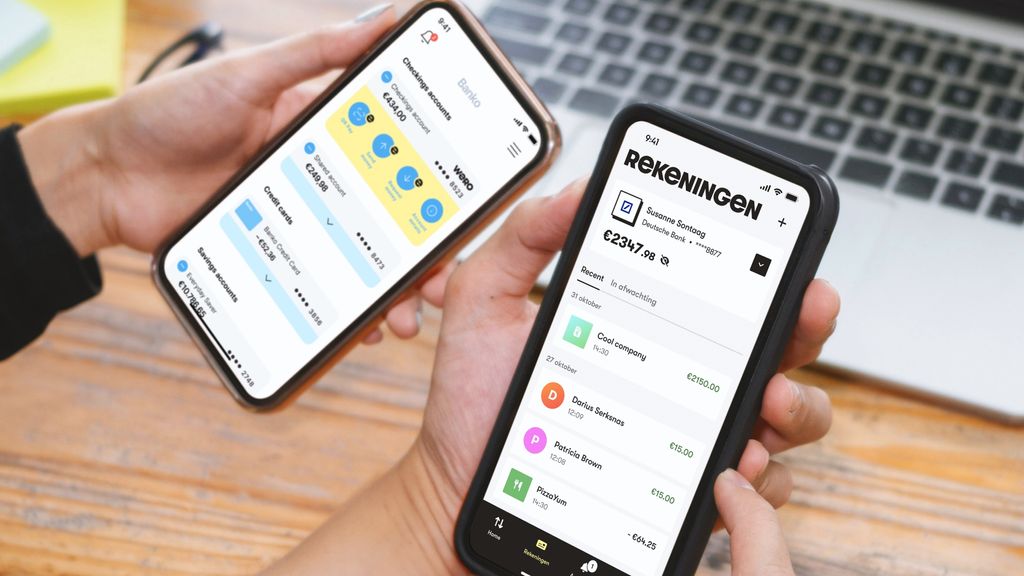
After twenty years, the popular payment method iDeal will disappear step by step over the next year. The name of the method to make online payments and transfer money changes to Wero. That is the European variant of iDeal which was conceived by Dutch banks.
For anyone who pays with iDeal now, nothing is changing, emphasizes Amos Kater of iDeal’s owner Currence. So don’t fall for scams, he warns: “There will probably be fake emails and messages in which scammers say you have to change your data for Wero. Don’t do that, because you just keep paying with the bank’s app, just like you do with iDeal.”
The Dutch banks launched iDeal in 2005. Until then, buying online was coming off the ground slowly because each bank had developed its own methods for paying for something online. With iDeal, stores had to offer only one payment method on their website.
The Dutch success led to the creation of a new company a year and a half ago, in which the Dutch banks together with those from Belgium, France, Germany and Luxembourg made a European variant of iDeal. Because the name iDeal did not have an equally fortunate association in every country, a new name was chosen: Wero, a merger of ‘We Euro’.
Now that banks in Germany, Belgium and France have rolled out Wero over the past year, the familiar name iDeal will slowly change to Wero in the Netherlands in the coming year. “On webshops you will see a new logo with iDeal/Wero from January. It’s not more than that,” Kater explains the change. “With this new logo, we want to make it clear that iDeal and Wero belong together. And that you can also have the confidence of iDeal in Wero.”
Later in the year, it is tested step by step whether the Wero system works error-free with online payments. At the end of next year, the first webshops will switch to the technical system of Wero. Kater: “In 2027, iDeal will be phased out completely.”
With Wero, webshops get a large group of extra customers. With iDeal, only Dutch consumers can pay. With Wero, Belgian, German and French customers will also be added with the same payment method. Luxemburg will follow soon and there will also be discussions with Austrian banks. “The ambition is every country in Europe,” says Kater.
Consumers who want to buy something elsewhere in Europe do not need to use a credit card, PayPal or other payment method. And not only on the internet, Kater says: “For example, if you want to charge your electric car abroad, you can also pay with Wero via your own bank app.”
In addition, iDeal will be expanded with some new features. The most important thing is a purchase protection: “If a product is not delivered, your rights must currently be honoured by the webshop. With Wero, this will soon be done through your bank, just like you can with a purchase via a credit card. Or you can set the money to be debited from your account only when the product is delivered.”
It will also be possible to pay for subscriptions automatically via Wero, as an alternative to direct debit. “That function can also be very interesting for shops, associations and charities,” Kater believes.
The Consumentenbond (Consumers Union) calls the transition from iDeal to Wero “promising,” especially as it can be a good substitute for payment services from large U.S. companies.
In Europe, virtually every country has its own systems for identification and online payment. American competitors such as Mastercard, Visa, PayPal and Apple Pay give Europeans the opportunity to pay with the same method everywhere.
Europe fears that the disabling of the systems of, for example, Mastercard and Visa can be used to put political pressure on the continent. European banks believe that Wero should become the European alternative to this.
Glad to see we are finally making the jump! Also glad that people are seeing the threat of relying on American payment services, and that potential that Wero has to help deal with that threat.
They could have mandated to integrate Wero into Onlinebanking web interfaces, right next to instant SEPA transactions. They could have made Wero an open API like extending the 20+ year old HBCI/FinTS standards. Lock in to proprietary apps exclusively distributed in google’s and apple’s store is a conscious choice and not one I need to find “better” than anything else.
GNU Taler shows how you can do it right, but of course for really open systems there is no big ad campaign money.
Well, who is “they”?
Wero is a private european company (SE) owned by private banks. They made these choices consciously, and even then it’s not uniform: some banks integrate Wero into their online banking apps, some banks use the standalone app instead.
Wero is not a EU project, it’s merely “supported” by the Commission and the ECB.
they = EPI in this case, but we can also dream that the European Union as a whole could mandate that “critical infrastructure” (to be defined) must be available outside of american app stores.