

- cross-posted to:
- [email protected]
- [email protected]
- cross-posted to:
- [email protected]
- [email protected]
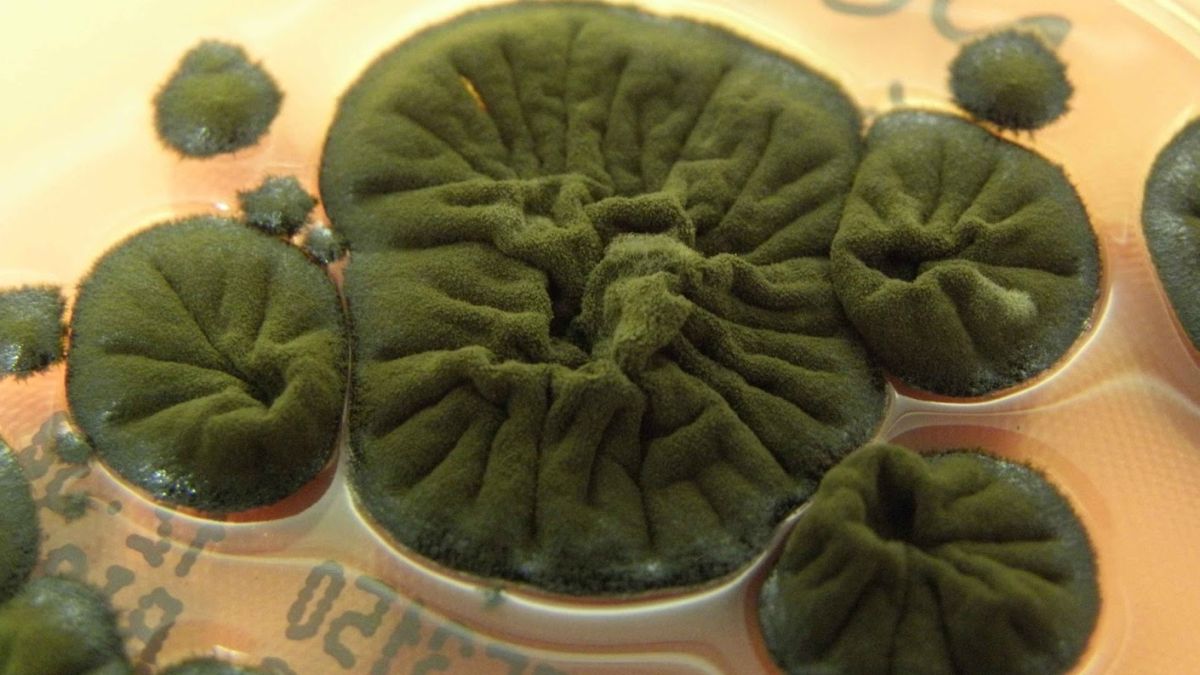
“That fungus is called Cladosporium sphaerospermum, and some scientists think its dark pigment – melanin – may allow it to harness ionizing radiation through a process similar to the way plants harness light for photosynthesis. This proposed mechanism is even referred to as radiosynthesis.”
cross-posted from: https://lemmy.world/post/39553283 https://libretechni.ca/post/483480
Does this fungus “eat” the radiation, as in we can use it to clean up radioactive areas? Cause that’d be nice.
Sadly, no. Radioactive processes happen without any external control (at least not on this level, they don’t run a reactor or accelerator), and this fungus only harvests the energy.
Akin to how plants photosynthesize without doing anything to the sun.
At least there it does provide shade, though I doubt the fungus would provide a whole lot of shielding…
If it’s absorbing the energy, then it’s not passing through. That’s shielding.
But like light shining through a plant’s leaves, it probably doesn’t absorb anywhere near all the energy, so probably not useful as actual shielding material.
But, like any shielding, the thickness matters. And if this stuff could also convert CO2 to oxygen, having a bunch would be a good thing.
It eats the radiation, not its source though. The emitter would have to be removed. Maybe it could be used in shielding ? Like in space where background radiation seems to be a problem.
It needs carbon to grow, so it would be a CO2 scrubber AND a source of food assuming it’s edible. 🤔🤔🤔
I would not be eating something with a radioactive-based diet in space… that’s like 2 steps away from opening the gates of hell of something like that xD
bonus: you won’t need eyes?
Damn that was a rough one
Fantastic thing though: It doesn’t “eat” radiation in the sense that it becomes radioactive itself. It just absorbs the energy from the radiation, like plants absorb sunlight, to power a synthesis that lets it convert CO2 to organic material.
BFG Division intensifies
Well if it just evolved this ability that suggests it found a unique niche. But it probably hasn’t optimized this, since it doesn’t have any pressure to compete against other organisms for the radiation source.
But the good news is that we could selectively breed the fungus, or even generically engineer it (once the genes are isolated) to maximize the ability much faster.
I don’t know how useful it would be for site cleanup but it might at least become good insulation (like the idea of space station shielding mentioned in the article).
In the future, instead of shooting up shiny silver rockets, we’ll be firing up rockets covered in gross mold.
Obviously you hide the gross fungi under a nice silvery façade. You don’t compromise aesthetics in space or all the other stellar societies will laugh at us, and uninvite us from the quasar parties.
One potentially useful thing that they could be used for is finding radioactive contamination. Presumably it grows best at higher radiation, so instead searching with
gingerGeiger counters for radioactive contaminants you could spread this stuff out over the environment, then just look for where it is growing a while later. Engineer it to be bright orange or something.One ginger, two ginger… Lot of redheads around today
We could breed it to incorporate radioactive particles to make it independently self-sustaining
Like everything nuclear, it’s a double edge sword. Clearing up nuclear power would be amazing. People knowing they can Nuke something and eradicate the after effects quickly
You mean, digesting one of the dotzens of toxic Uran derivatives to thin air? I don’t think so.