
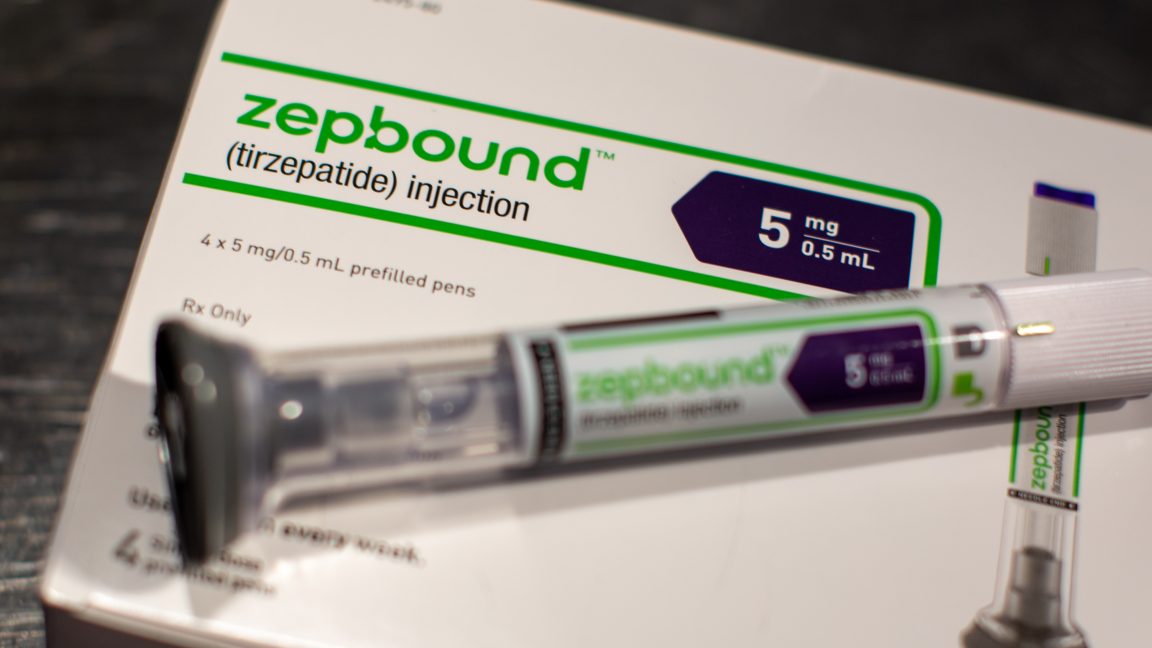
In trial, 82% saw weight rebound and cardiovascular health reverse after withdrawal.
That’s because, as noted in the article, these are functionally weight management drugs, not weight loss drugs. This isn’t really a “hur dur drug companies bad” situation, there are tons of drugs and therapies that are life long (statins, CPAP, antidepressants, and insulin just to name four). Something’s can’t be “cured” like an illness and what GLP-1 drugs treat are exactly those types of conditions. If the price for staying at a healthy weight and all the related benefits is to need to use a GLP-1 drug for the rest of your life, many people would be 100% okay with that (and so would insurance since it otherwise decreases their cost due to the need to treat and manage comorbidities associated with obesity).
It also isn’t that GLP-1s are “shortcuts” or an “easy” way to treat obesity. For many people they can’t lose weight to a healthy point without help. They may have a hormone imbalance, be genetically predisposed to slower metabolism or higher fat retention, be unable to exercise effectively due to chronic injury or disability, or otherwise have an underlying condition that makes it significantly harder or impossible to get and stay at a healthy weight. To shame anyone for trying to be healthier by using the tools available is small minded and shows a distinct lack of awareness of the real world.
My health insurance company announced this year that they will no longer cover GLP-1 drugs prescribed for weight loss.
I appreciate the comment, these are important points that I did not include in the post and I didn’t mean to imply otherwise when posting this.
I thought this article was worth sharing because some people promoting these products still say/imply that they can be used temporarily. Some people may start treatment without fully understanding the details:
Some studies have found that about half of people who start taking a GLP-1 drug for weight loss stop taking it within a year—for various reasons—and many people think they can stop taking anti-obesity drugs once they’ve reached a desired weight, Oczypok and Anderson write. But that’s not in line with the data.
This part was also interesting. If there IS a way to stop taking the drugs after a while, or safer ways to wean patients off the drugs if they can no longer continue, then that is worth investigating:
Data gaps and potential off-ramps
On the other hand, there were 54 participants of the 308 (17.5 percent) who didn’t regain a significant amount of weight (less than 25 percent.) This group saw some of their health metrics worsen on withdrawal of the drug, but not all—blood pressure increased a bit, but cholesterol didn’t go up significantly overall. About a dozen participants (4 percent of the 308) continued to lose weight after stopping the drug.
The researchers couldn’t figure out why these 54 participants fared so well; there were “no apparent differences” in demographic or clinical characteristics, they reported. It’s clear the topic requires further study.
Oczypok and Anderson highlight that the study involved an abrupt withdrawal from the drug. In contrast, many patients may be interested in slowly weaning off the drugs, stepping down dosage levels over time. So far, data on this strategy and the protocols to pull it off have little data behind them. It also might not be an option for patients who abruptly lose access to or insurance coverage for the drugs. Other strategies for weaning off the drugs could involve ramping up physical activity or calorie restriction in anticipation of dropping the drugs, the experts note.
In addition to more data on potential GLP-1 off-ramps, the pair calls for more data on the effects of weight fluctuations from people going on and off the treatment. At least one study has found that the regained weight after intentional weight loss may end up being proportionally higher in fat mass, which could be harmful.
For now, Oczypok and Anderson say doctors should be cautious about talking with patients about these drugs and what the future could hold. “These results add to the body of evidence that clinicians and patients should approach starting [anti-obesity medications] as long-term therapies, just as they would medications for other chronic diseases.”
I mean.
There may be nuances I don’t understand.
But I’ve never understood how so many people have bodies that disobey the laws of thermodynamics and the conservation of energy.
There may be nuances I don’t understand.
You probably could have stopped there, honestly.
The human body is complex enough that it would honestly be staggering if everyone’s body digested, metabolized, stored excess caloric content, and used that stored energy in the exact same way.
From what I understand, the “set point” for the hormonal triggers that decide whether someone stores fat or burns it are out of whack.
So someone might be so calorie-deficient that it becomes a serious issue, and yet their body is still trying to store fat instead of burning it.
This makes losing weight a lot harder and it’s a lot more miserable for them, as opposed to someone who can just eat a little less and their body will smoothly transition over to burning fat to make up the difference.
I feel like there stuff unsaid here that should be considered.
For example: those 82% of the cases with a “rebound” were all people who, for some justified reason couldn’t change their life style to a healthier one?
This, I feel, is important. Because I understand if you have a condition that doesn’t let you do sport or eat a variety of food, or have hormonal imbalances or otherwise a condition that makes you involuntarily gain weight. In this case, the rebound is logical and expected as the drug doesn’t cure your symptoms, just helps you fight the results of them.
But if you are just eating 5 burgers at lunch then hoping for the drug to help you and when you stop with the drug you keep your 5 burgers for lunch, of course you are going to see a rebound, but that’s on you, not on the drug.
EDIT: I finished reading the article. They did mention that those people kept a reduced calorie diet. So as I was saying in my second paragraph, the issue here is that the drug doesn’t cure but just helps fighting the results of an underlying issue.
That boosted their stock price, no doubt.
Endless profits, you say?
if behavior or biology got you there why is anyone surprised that you need to keep on the drug?
What part of “they would never release a drug that just fixes a problem permanently” don’t people understand?
Come on now. You want to be skinny the easy way, you gotta pay. Forever.
Are you suggesting there is a conspiracy? That they developed a cure for obesity and shelved it and paid off everyone involved to not say anything?
You should contact a journalist right away.
People really are fucking stupid.
Are you suggesting that capitalism will just allow something like that to exist?
The same capitalism that destroyed (and continues to destroy) the climate even though there are “cures” to the problem.
The same capitalism that pushed cigarettes on the public knowing full well there was a “cure” for everyone developing COPD and lung cancer?
The same capitalism that hates Ozempic because people are buying less junk food?
I’m not necessarily saying they have a cure for obesity. But you’d have to be pretty fucking naive to think it wouldn’t be fought/suppressed if there was. Go ahead and look up Ozempic and the snack food industry. Tell me there aren’t people spending money right now to keep Americans fat.