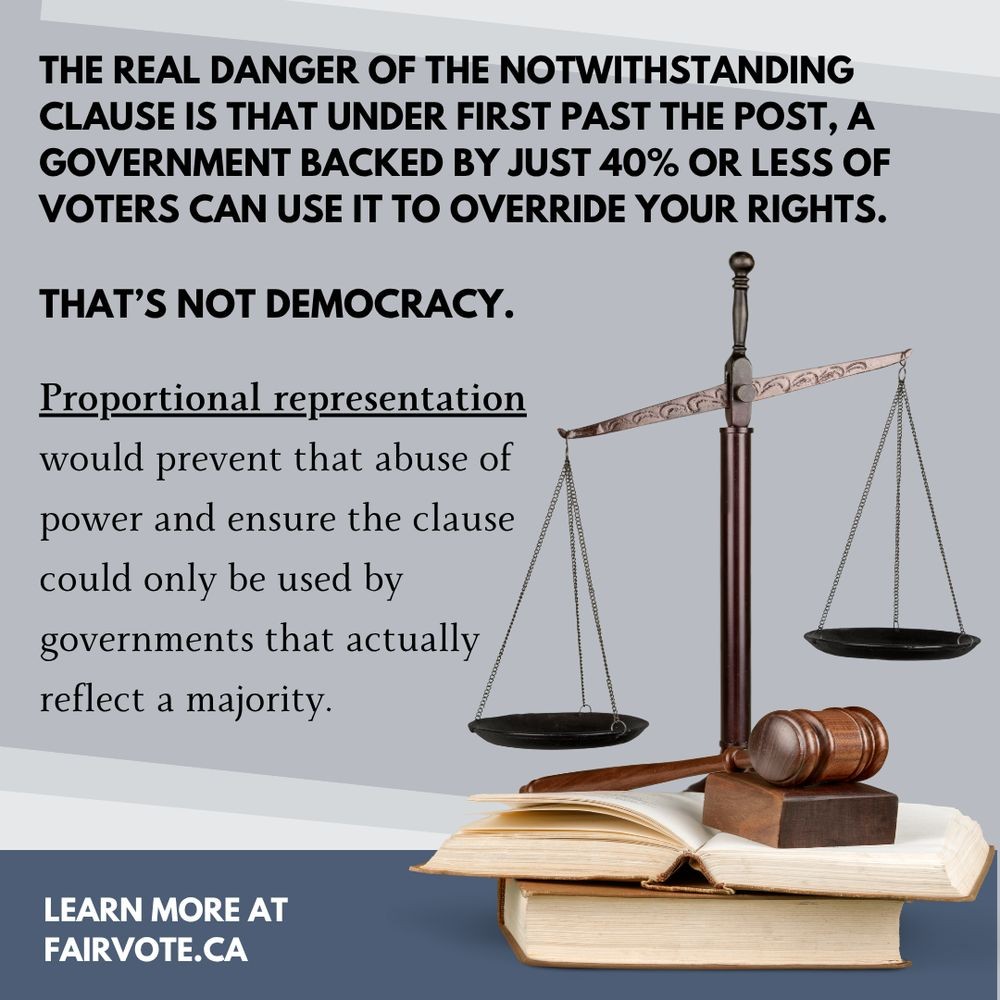
Proportional representation would make sure rights can’t be trampled by a minority.
Proportional representation also should be coupled with constitutional protections and an independent, randomly selected juridical power, that has dual authority over the executive together with the legislative. In emergencies, the juridical power is assumed to hold precedence.
The juridical power also should have a small executive group under its command, to safeguard itself against the tyranny of legislative and other executive groups. It must be able to arrest political leaders who call for the reduction of juridical power and call them biased, as that’s clearly a populist tool.
The legislative should be kept in check by the executive group of the juridical power.
In many western “democracies”, the legislative attempts to establish control over the juridical, and often already has over the executive; in other words, it’s attempting to establish a red fascist-style legislative.
The only freedom that can be achieved is through proportional and utter liberation of all mankind, through democratic socialism and communism. They provide that all have free healthcare, freedom from fascism and extortion, and freedom from corruption.
Interesting idea, is there some political system or philosophy that what you have described is called so I can look more into it?
I’d call it modified trias politica.
But really, I’m not sure. Personally, I support anarchocommunism. Kropotkin doesn’t discuss the trias politica much in his Conquest of Bread.
But a workable idea would be this.
The maxims of anarchocommunism consist of:
- Self-management and workplace democracy.
- Decentral federation: there is no hierarchy. It should be small-scale, in groups of 150.
- Mutual aid.
- A gift economy.
The order lies in there, that it is organised decentrally. What you want, is avoiding any power gathering. With trias politica, we see that the legislative always will attempt to encroach on other powers, and often succeeds.
Following that, I think the most logical path would be that there is no executive, no legislative, no juridical force; instead, all do these tasks all together (unified power). Just as you can help stock shelfs, and decide together to organise the store differently, and to check whether you all do it right, so too can a store be ran by itself.
When we also make groups small-scale and decentralised, it is also easier to combat tyranny. All must be involved for decisions. Unified power therefore, must involve all.
Within authoritarian systems in where there is only one unified power, typically all that power belongs to a few, not to everyone, effectively creating classes. But if that power belongs to everyone, then tyranny is hard to pull off — especially if groups are small each and federated.
Problems mainly arise due to greed and corruption; and both can only arise due to capitalism and monetary economics. When both are eliminated, and the society is focused around need rather than merit, it is fairer. It also helps if the system is ‘natural’.
I mean, if the majority of the people decide to forgo their right to vote, well…
That’s also the issue with the obsolete first-past-the-post, people can’t vote for their favourite candidates because they don’t want to trash their votes.